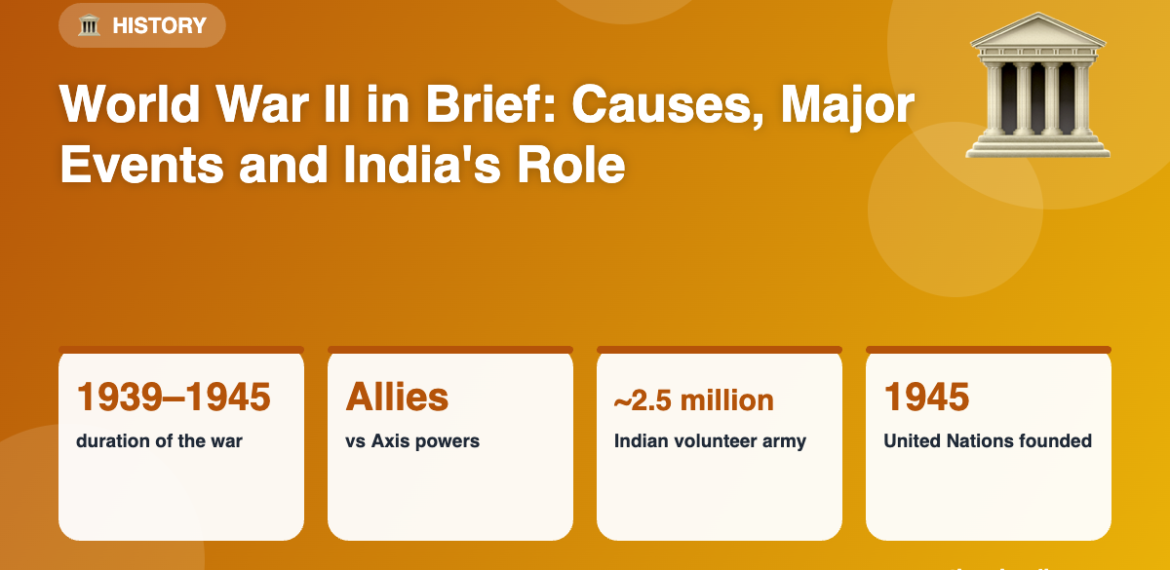
The Second World War (1939–1945) was the deadliest conflict in history. Learn its causes, turning points, how it ended, and the major contribution of Indian soldiers.
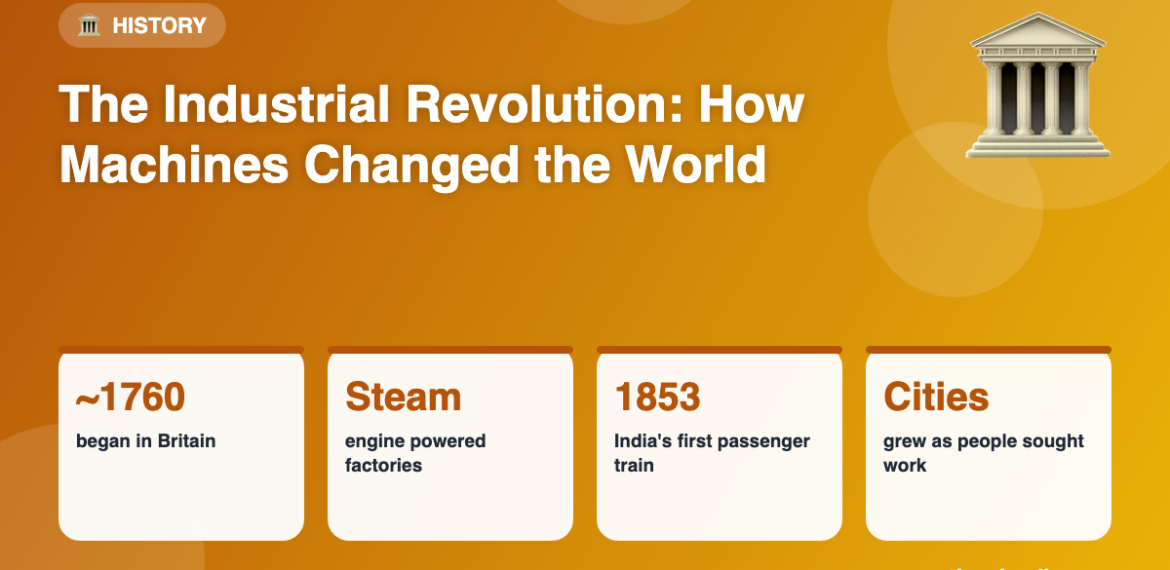
Starting in Britain in the 18th century, the Industrial Revolution replaced hand tools with machines and steam power. Learn its key inventions, effects on society, and its impact on India.
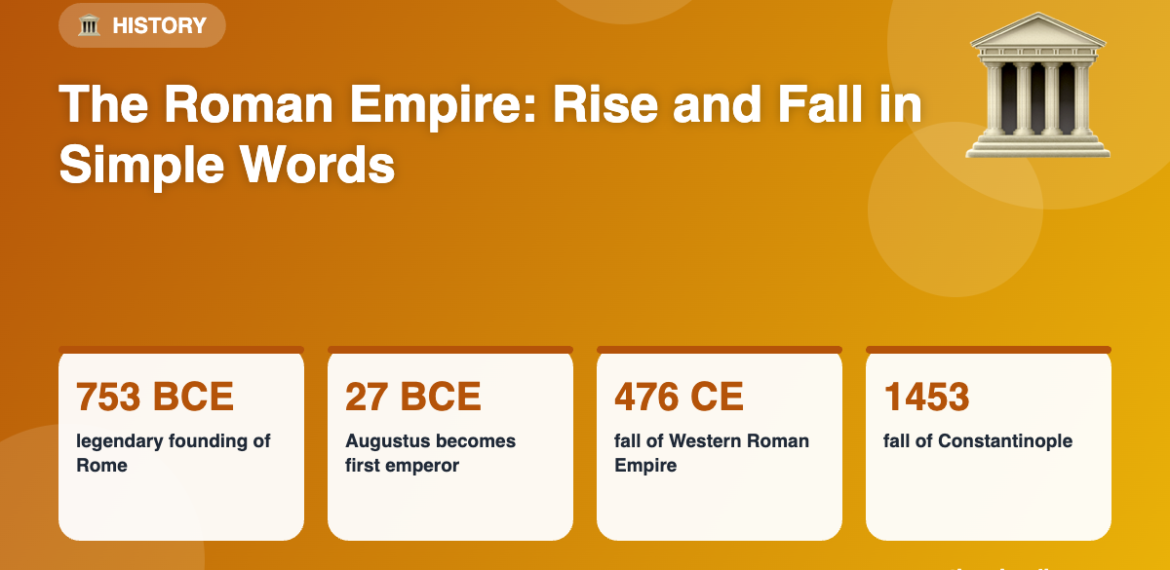
From a small town on the Tiber to a vast empire, Rome shaped law, language and architecture across the world. Learn how the Roman Republic became an empire and why it fell.
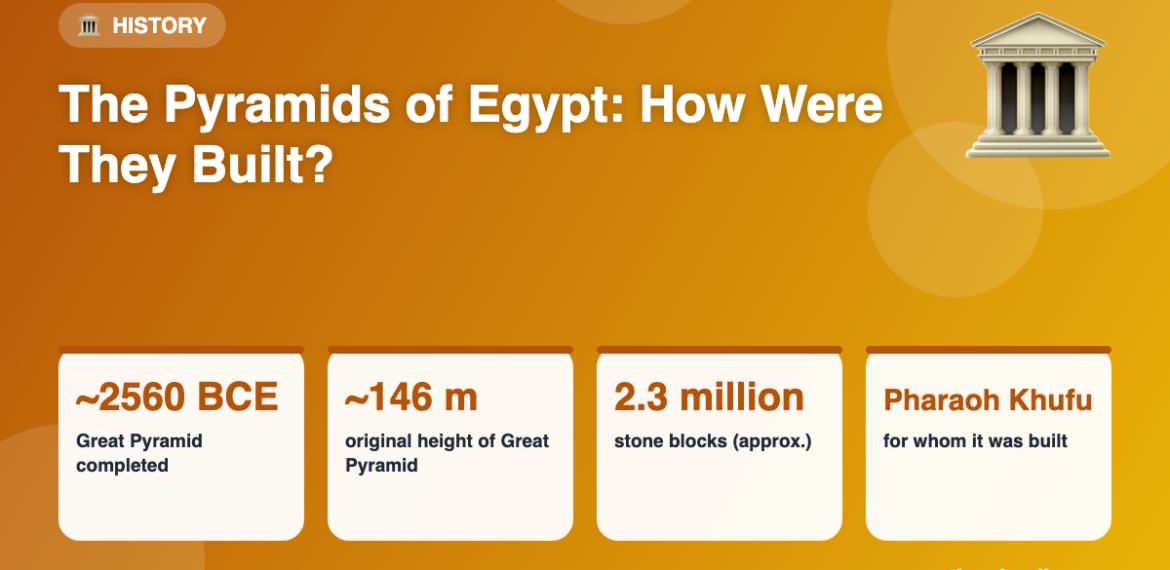
The Great Pyramid of Giza was the tallest human-made structure for thousands of years. Learn why the Egyptians built pyramids, how they did it without modern machines, and who really built them.
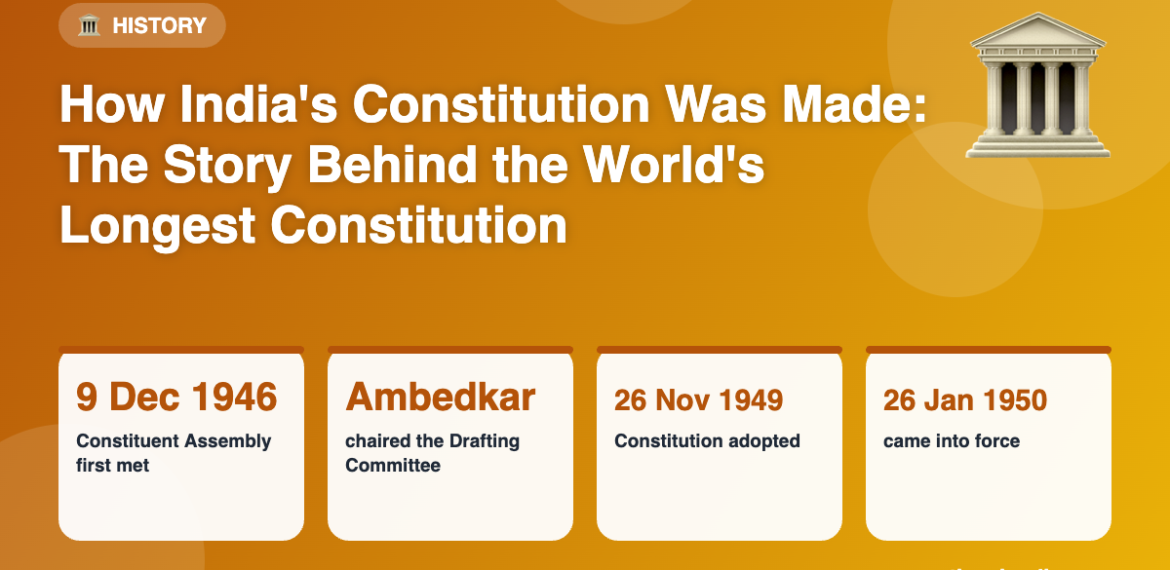
India's Constitution took nearly three years to draft. Learn about the Constituent Assembly, Dr B.R. Ambedkar's role, and why we celebrate 26 November and 26 January.
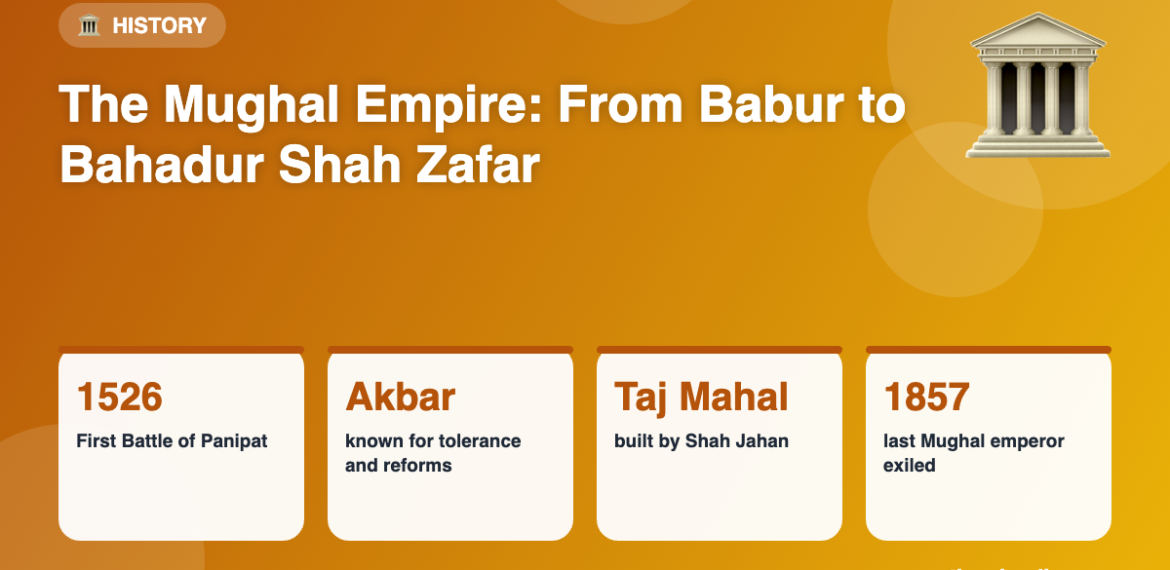
The Mughals ruled much of India for over three centuries, leaving behind the Taj Mahal, Red Fort and a rich blend of cultures. Learn about the great Mughal emperors and the empire's rise and fall.
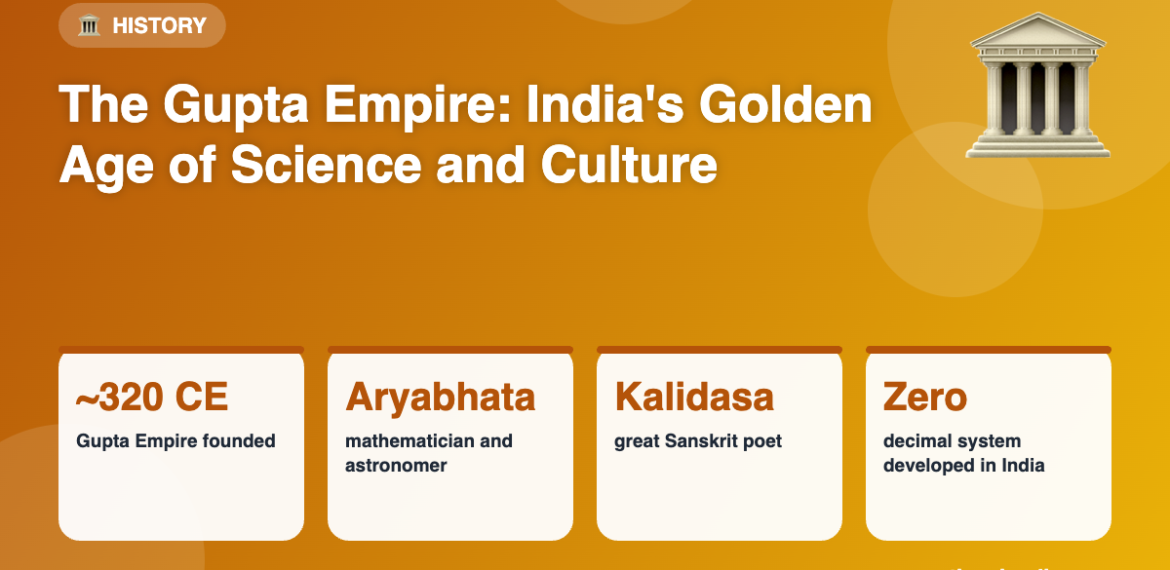
The Gupta period (about 320–550 CE) saw remarkable progress in mathematics, astronomy, literature and art. Learn about Aryabhata, Kalidasa, Nalanda and why it is called a golden age.
The Mauryan Empire was one of India's largest empires. Learn how Chandragupta Maurya founded it, how the Kalinga war changed Ashoka, and why his Lion Capital is India's national emblem.
More than 4,500 years ago, the Indus Valley Civilisation built planned cities with drains, granaries and great baths. Learn about Harappa, Mohenjo-daro, Dholavira and the mysterious Indus script.