

The pyramids of Egypt are among the most famous structures on Earth. The Great Pyramid of Giza is the only one of the Seven Wonders of the Ancient World still standing.
Why were pyramids built?
Pyramids were tombs for pharaohs, the kings of ancient Egypt. Egyptians believed in life after death, and the pyramid was meant to protect the king’s body and help his spirit journey to the afterlife. Tombs were filled with food, treasure and objects the king would need.
The Great Pyramid
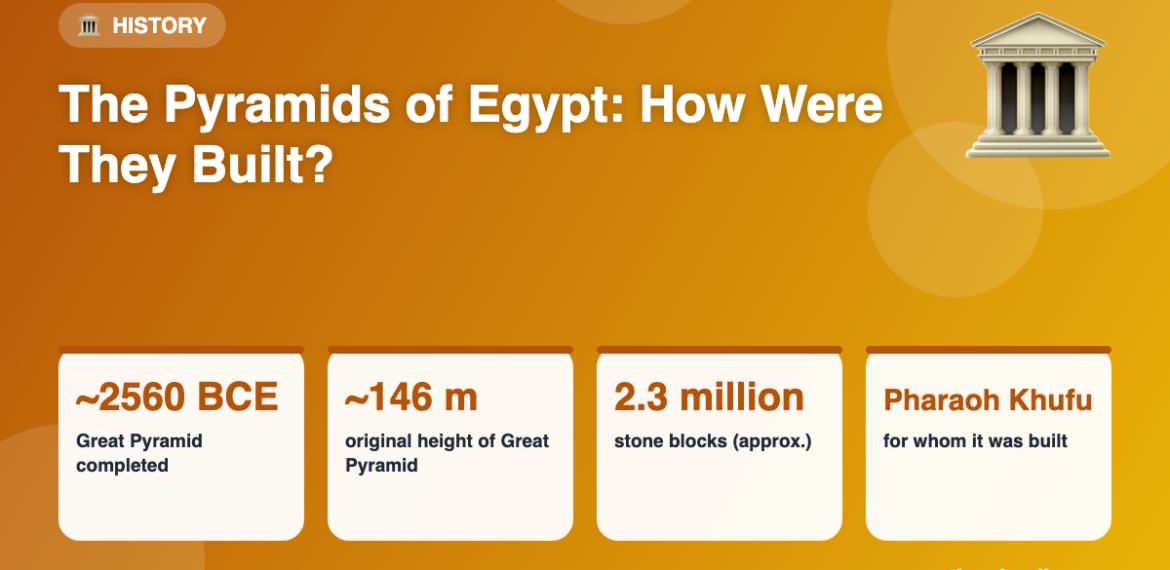
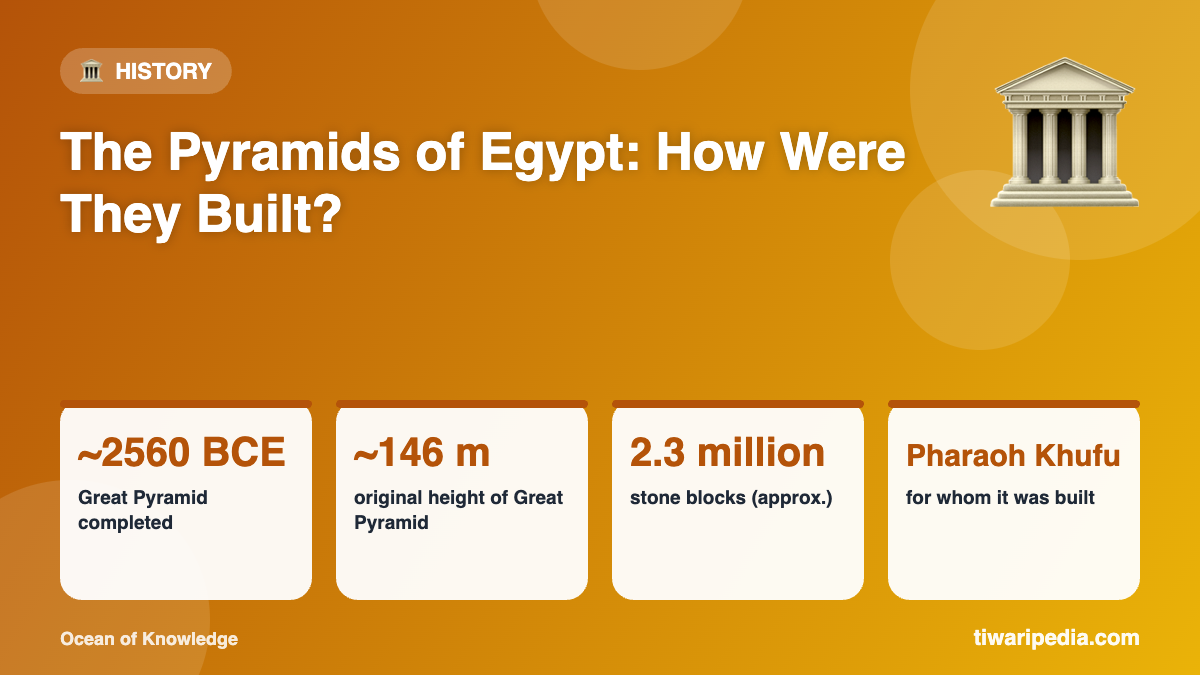
- Built for Pharaoh Khufu and completed around 2560 BCE.
- Originally about 146 metres tall, it was the tallest human-made structure in the world for more than 3,800 years.
- Made of an estimated 2.3 million stone blocks, many weighing over 2 tonnes.
- Its sides are aligned almost exactly with north, south, east and west.
Nearby stand the pyramids of Khafre and Menkaure and the Great Sphinx.
How were they built?
Without iron tools, wheels for heavy transport, or modern machines, the Egyptians relied on skill and organisation:
- Quarrying: workers cut limestone with copper tools; granite came from Aswan, far to the south.
- Transport: blocks were floated on boats along the Nile and canals, then dragged on wooden sledges. Wetting the sand in front of sledges reduced friction.
- Lifting: most historians believe workers used ramps of mud brick and rubble, possibly straight, zig-zag or spiralling around the pyramid.
Who built them?
Not slaves, as was once popularly believed. Archaeologists have found workers’ villages, bakeries and tombs near Giza, showing that the builders were organised teams of paid labourers and skilled craftsmen, possibly helped by farmers working during the Nile’s flood season.
Mummies and the afterlife
Egyptians preserved bodies through mummification, removing organs, drying the body with natron salt and wrapping it in linen.
Later burials
Later pharaohs, such as Tutankhamun, were buried in hidden rock-cut tombs in the Valley of the Kings instead of pyramids, partly to protect them from tomb robbers.




