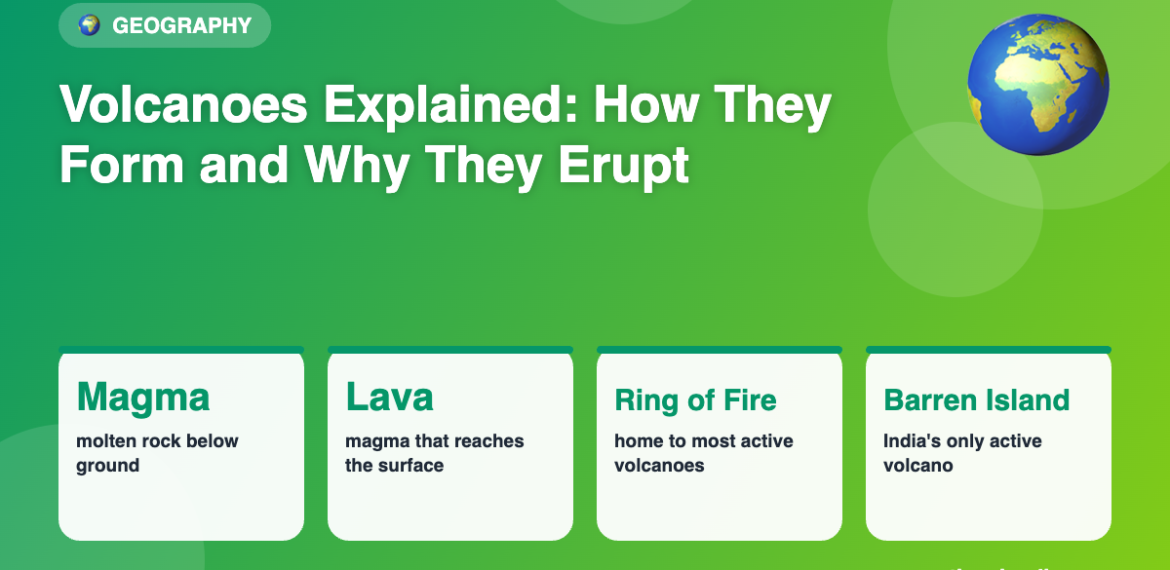
A volcano is an opening in Earth's crust where molten rock, ash and gases escape. Learn how volcanoes form, the main types, why they erupt, and about India's only active volcano.
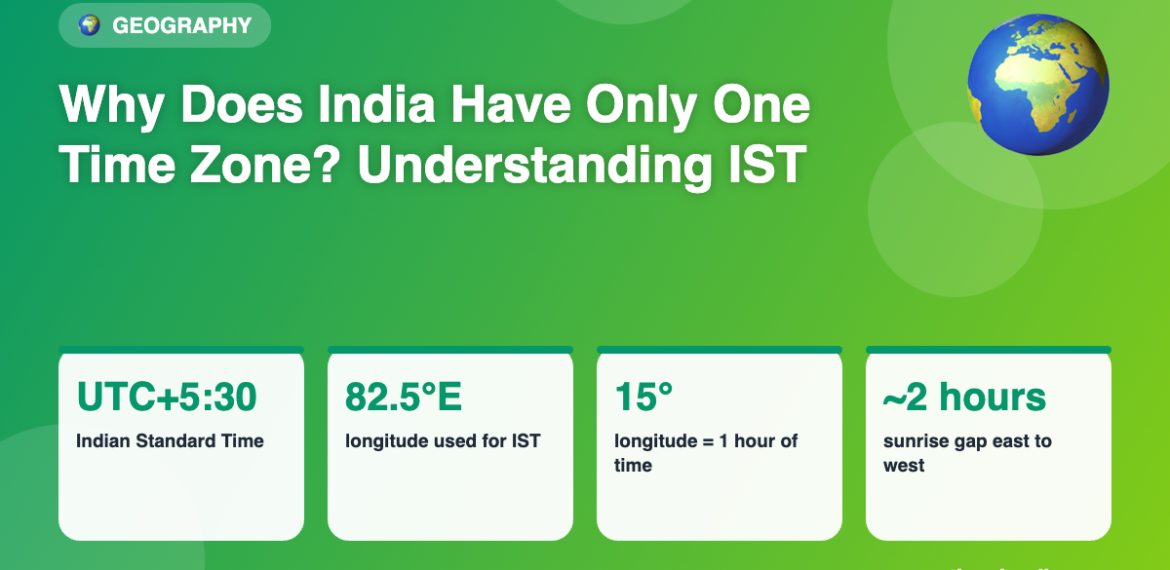
India stretches nearly 3,000 km from east to west but uses a single time zone, IST (UTC+5:30). Learn how time zones work, why IST is set at 82.5°E, and the debate over two time zones.
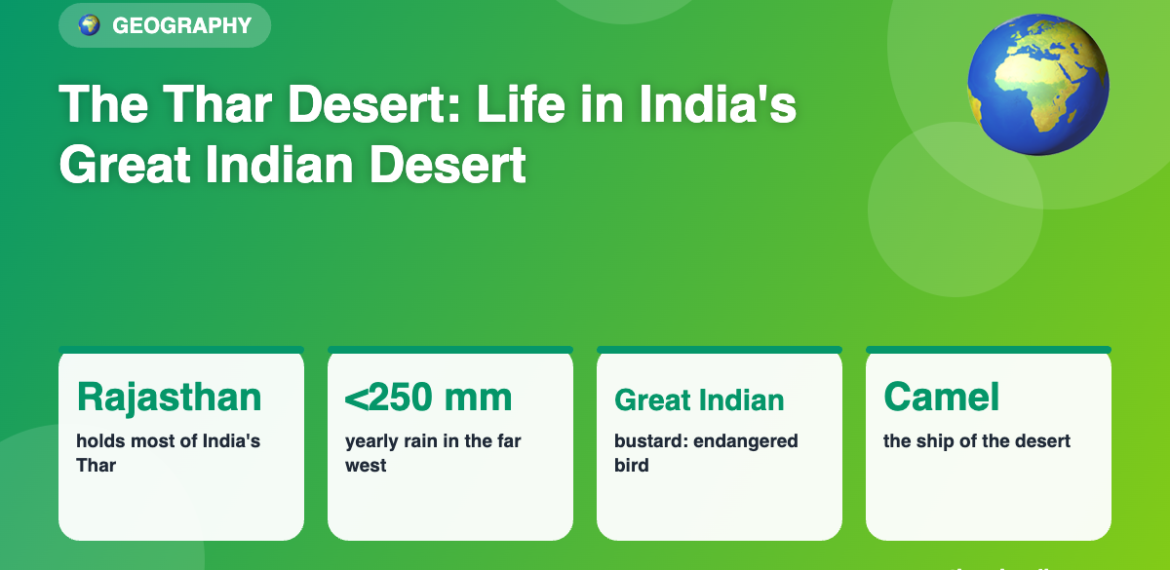
The Thar Desert covers much of western Rajasthan and extends into Pakistan. Learn about its climate, sand dunes, wildlife, people and the famous Jaisalmer fort.
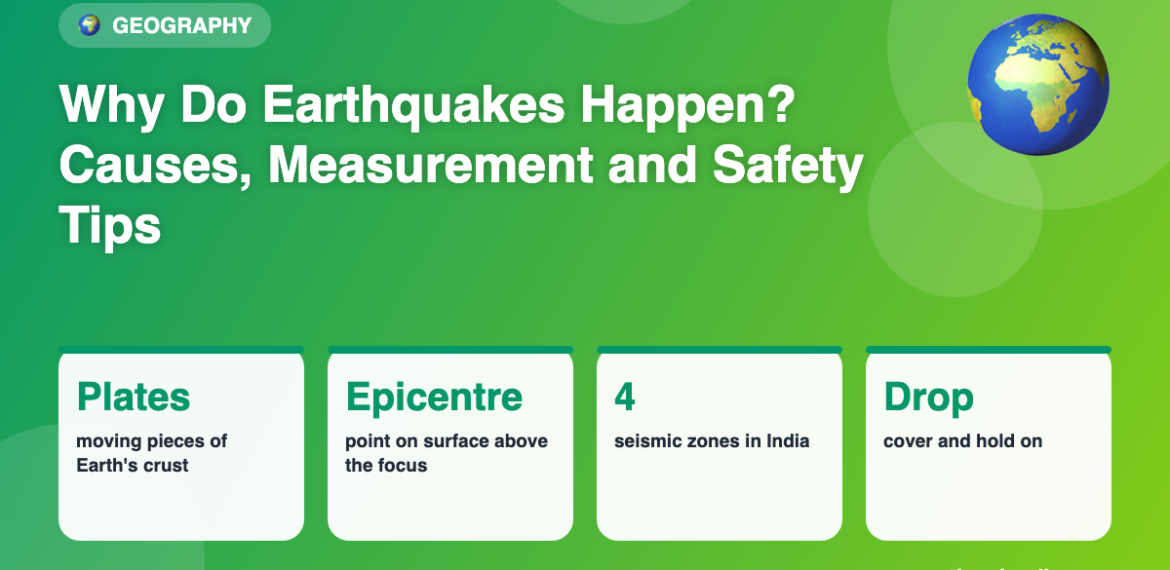
Earthquakes happen when stress builds up along faults in Earth's crust and is suddenly released. Learn about tectonic plates, how earthquakes are measured, India's seismic zones and safety tips.
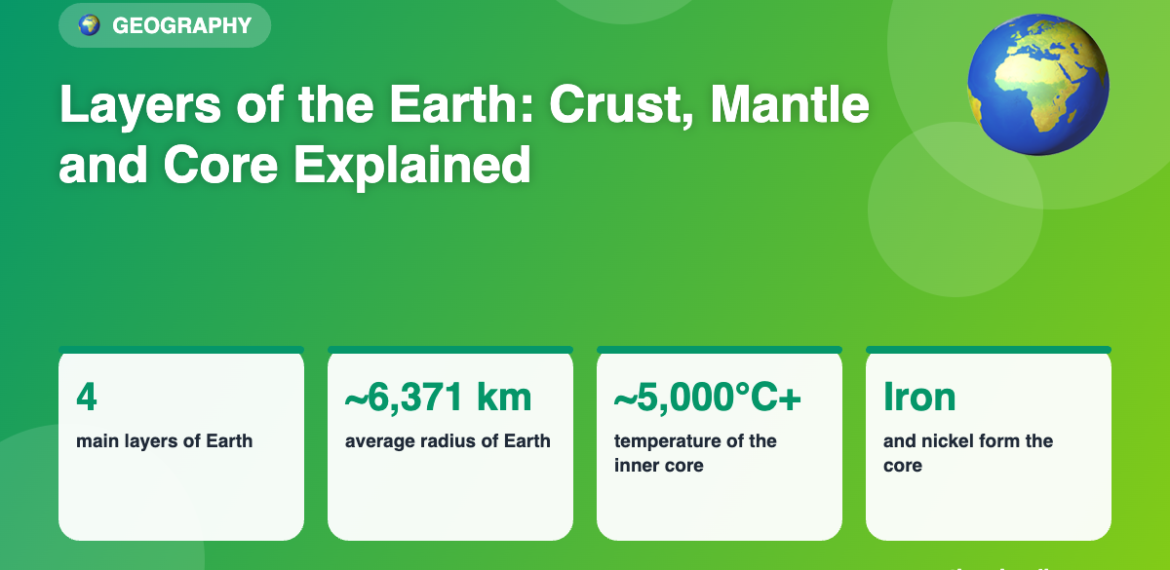
Earth is made of layers like an onion: the crust we live on, the hot mantle, and a metal core hotter than the Sun's surface. Learn what each layer is made of and how we know.
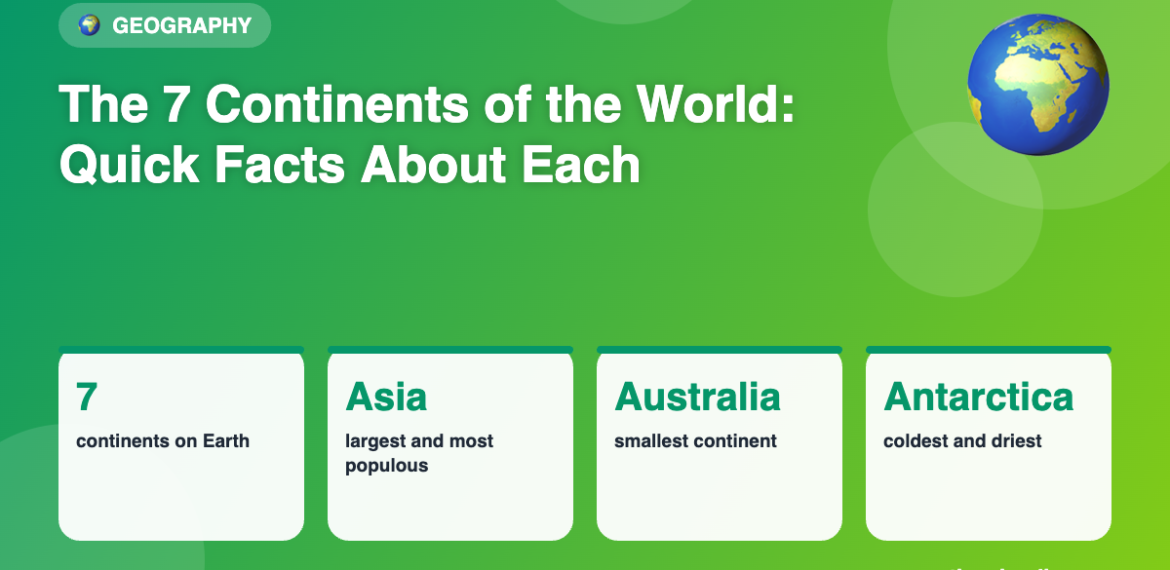
Asia, Africa, North America, South America, Antarctica, Europe and Australia: learn simple, surprising facts about each of the world's seven continents.
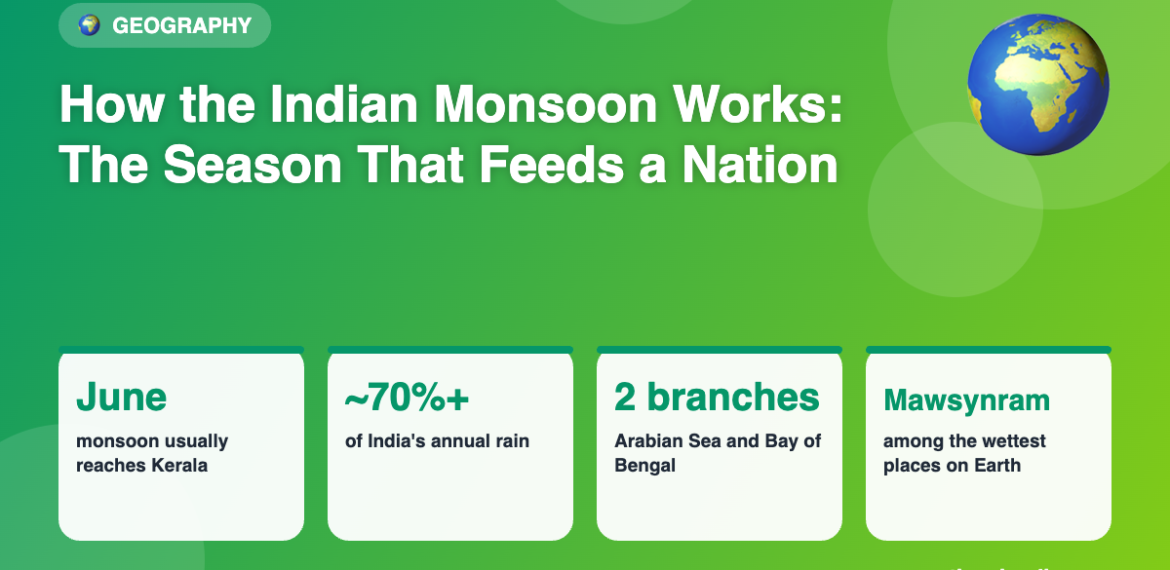
The monsoon brings most of India's yearly rainfall. Learn what causes it, how it arrives in Kerala and spreads north, and why it matters so much for farming and the economy.
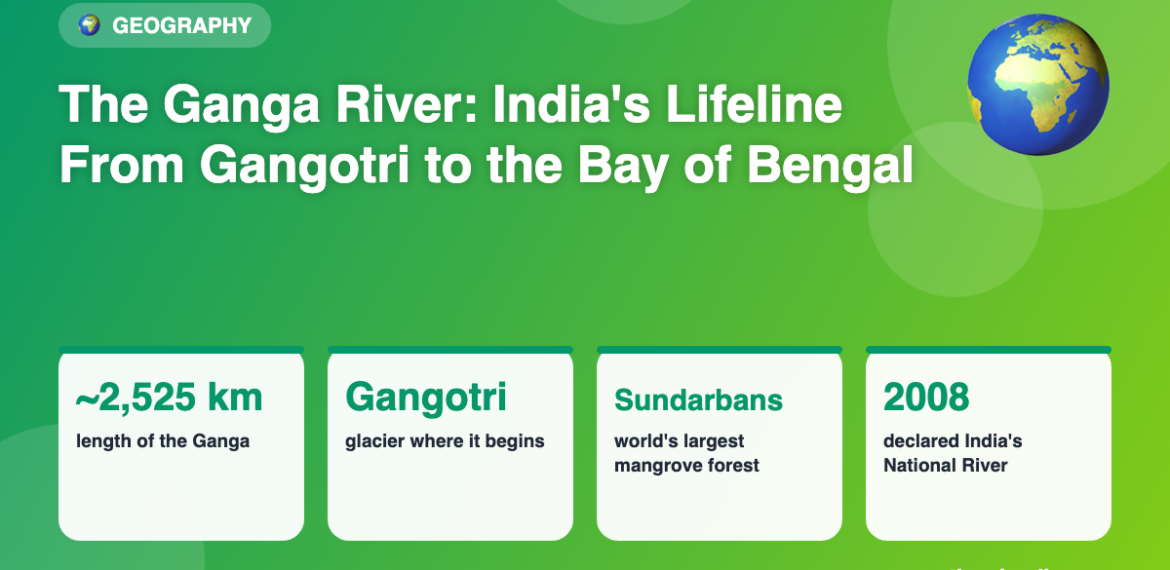
The Ganga flows about 2,525 km from the Himalayas to the Bay of Bengal. Learn its source, route, tributaries, the Sundarbans delta and why it is central to India's life and culture.
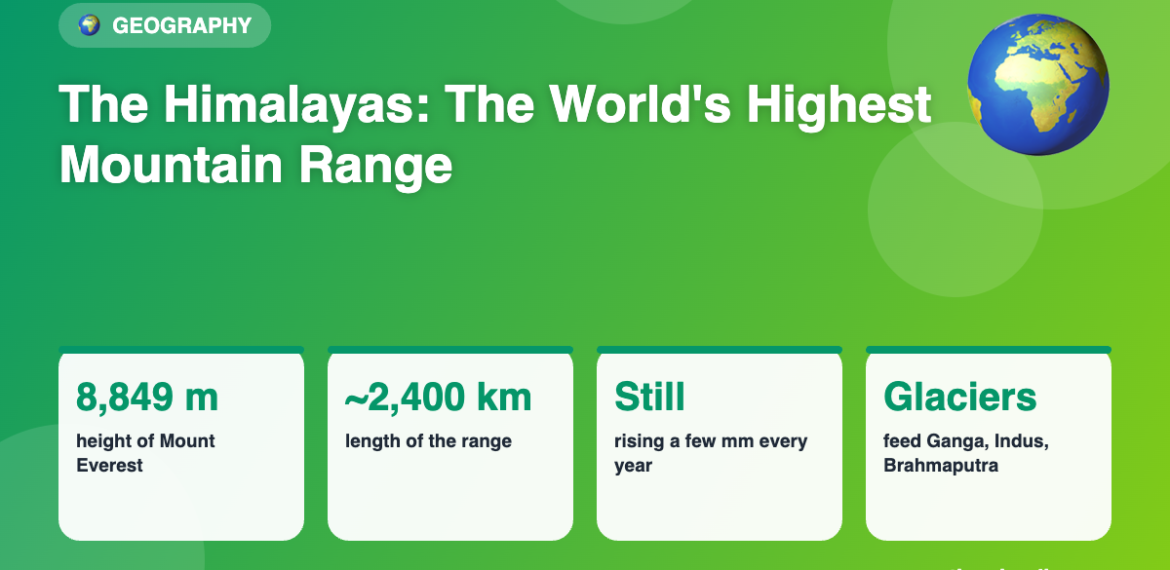
The Himalayas stretch across five countries and hold the world's highest peaks, including Mount Everest. Learn how they formed, why they are still rising and why they matter to India.