

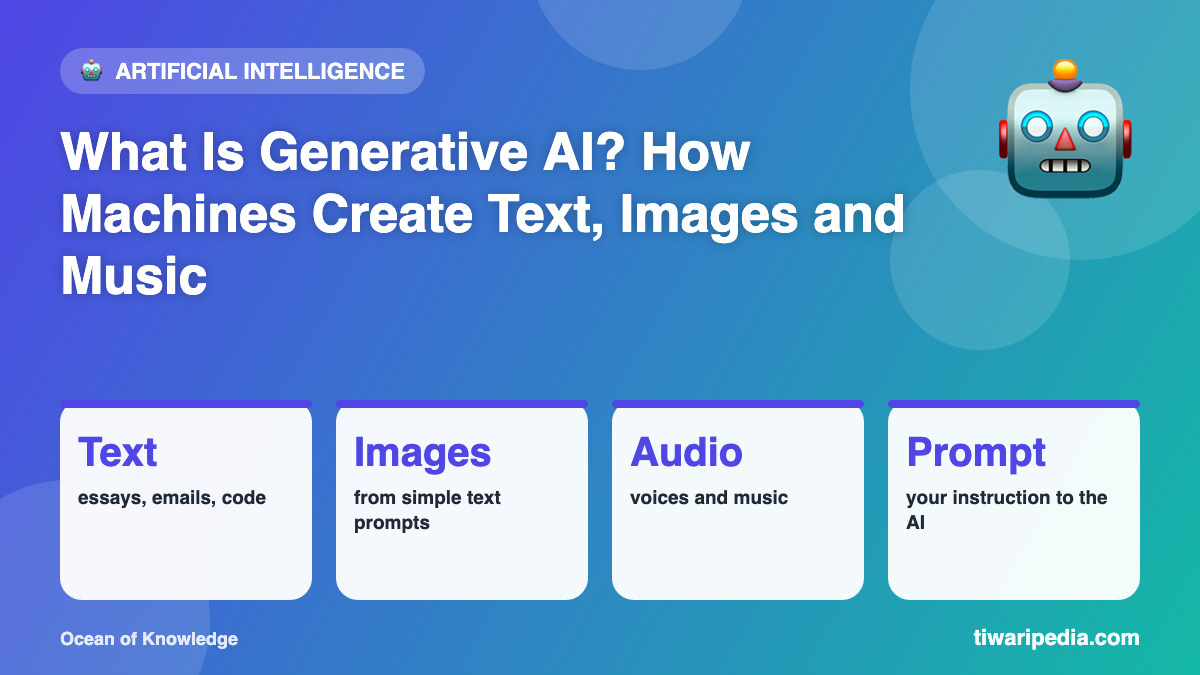
Most earlier AI systems were built to analyse: sort emails, recognise faces or predict prices. Generative AI goes further: it creates new content such as text, images, music, voices, video and computer code.
How does it work?
Generative AI models are trained on very large collections of examples. They learn the patterns and structures within that data, then use those patterns to produce new content in response to an instruction called a prompt.
- Text generators use large language models that predict text piece by piece.
- Image generators commonly use “diffusion” models, which learn to turn random noise step by step into a clear picture that matches a description.
- Audio and video models generate speech, music and moving images.
Popular uses
- Writing: drafts of emails, articles, summaries and social media posts.
- Design: illustrations, product mock-ups and marketing images.
- Education: explanations, quizzes and practice questions.
- Coding: writing and explaining computer code.
- Accessibility: text-to-speech and translation into Indian languages.
- Business: customer support and data analysis.
Writing good prompts
Be clear and specific. Instead of “a picture of a city”, try “a colourful watercolour illustration of a busy Indian market street at sunset”. For text, mention the audience, tone and length.
Important concerns
- Accuracy: generated text can contain errors.
- Deepfakes: realistic fake images, voices and videos can be misused for fraud or misinformation.
- Copyright: there are ongoing debates about training on creators’ work and who owns AI-generated content.
- Bias: outputs can reflect stereotypes in training data.
Used responsibly, generative AI is a powerful creative tool, but human judgement remains essential.




