

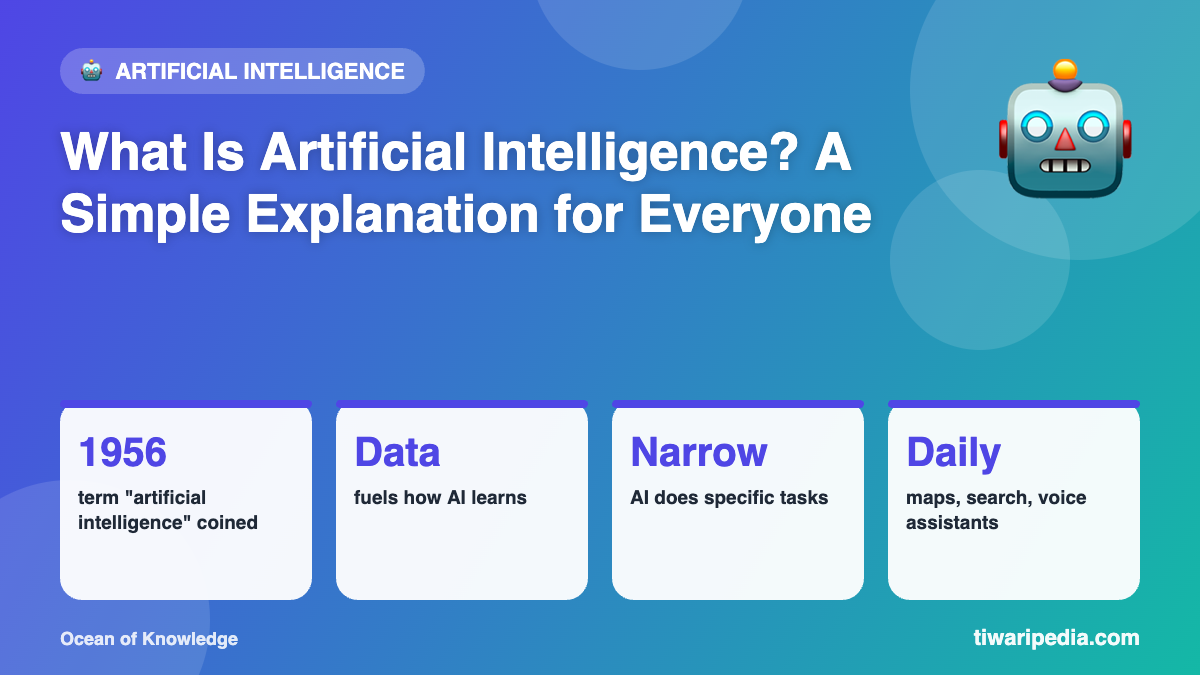
Artificial intelligence (AI) is the ability of computers and machines to perform tasks that normally need human intelligence, such as understanding language, recognising images, solving problems and making decisions.
How is AI different from normal software?
Traditional software follows rules written step by step by programmers. Many modern AI systems instead learn patterns from large amounts of data. For example, rather than writing rules for what a cat looks like, engineers show a system thousands of cat photos and it learns to recognise cats itself.
Types of AI
- Narrow AI: designed for specific tasks, such as recommending videos, translating text or detecting spam. All AI in use today is of this kind, though some systems are becoming very broad in what they can do.
- General AI (AGI): a hypothetical AI that could understand and learn any intellectual task a human can. Researchers debate how and when it might be achieved.
Where you already use AI
- Maps: predicting traffic and the fastest route.
- Phones: face unlock, camera enhancements and voice assistants.
- Search engines and translation apps.
- Streaming and shopping recommendations.
- Banking: detecting fraudulent transactions.
- Email: spam filters and smart replies.
- AI chatbots that answer questions and help write and code.
Key ingredients of AI
- Data: examples to learn from.
- Algorithms: methods for learning patterns.
- Computing power: powerful chips that process data quickly.
Benefits and concerns
AI can help diagnose diseases, improve farming, make services faster and support learning. But it also raises important questions about privacy, bias, misinformation, jobs and safety. Using AI wisely means enjoying its benefits while managing these risks.




