

Television transformed how Indians received news and entertainment, bringing the whole country together in front of the screen.
The beginning: 1959
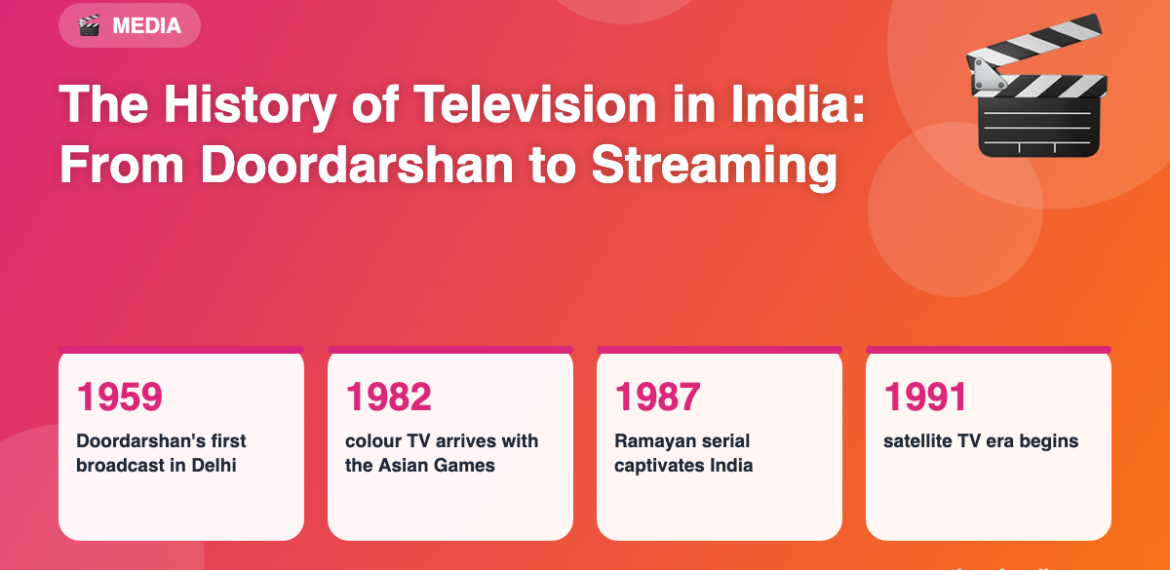
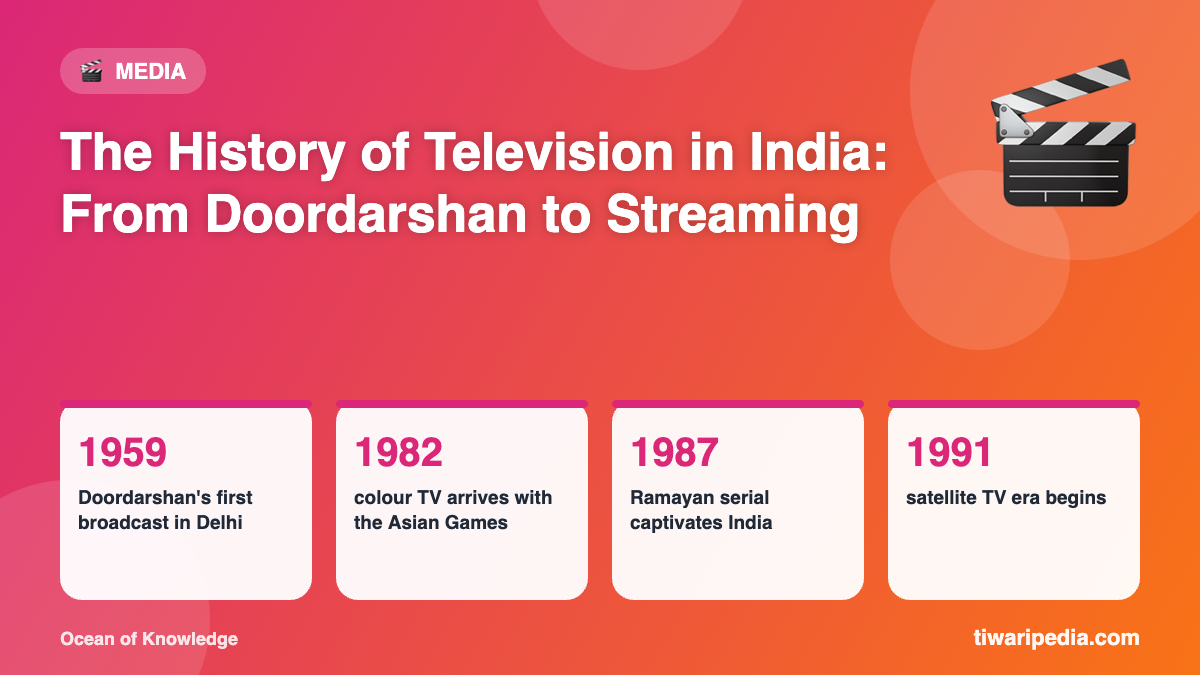
Indian television began on 15 September 1959 with an experimental broadcast from Delhi. Programmes were short and educational, and only a handful of TV sets existed. This service later became Doordarshan, which was separated from All India Radio in 1976.
SITE: TV for villages
In 1975–76, the Satellite Instructional Television Experiment (SITE), using a NASA satellite, beamed educational programmes on farming, health and family planning to thousands of villages, a pioneering use of satellite TV.
Colour and national broadcasts
In 1982, colour television and national broadcasts arrived in time for the Asian Games hosted in Delhi. TV sales boomed.
Iconic serials
The 1980s saw classics such as Hum Log, India’s first long-running soap opera, Buniyaad, Malgudi Days and the epics Ramayan (1987) and Mahabharat (1988). Streets reportedly emptied on Sunday mornings when they aired.
The satellite revolution: 1991
After economic liberalisation, foreign and private satellite channels arrived from 1991 through cable networks. Soon India had channels in many languages for news, films, cartoons, sport and music.
DTH and digital TV
Direct-to-home (DTH) satellite services in the 2000s brought clearer pictures and hundreds of channels to homes, including remote areas. Doordarshan’s free DTH service reaches millions of rural homes.
The streaming era
Cheap mobile data and smartphones have led millions to watch shows and films on streaming apps and video platforms. Smart TVs combine both worlds. Yet television remains one of the most widely used media in India, especially for news and live sport such as cricket.




