

Agriculture supports a large part of India’s population, but farmers face challenges such as unpredictable weather, pests, small landholdings and fluctuating prices. Artificial intelligence is beginning to help.
1. Detecting crop diseases
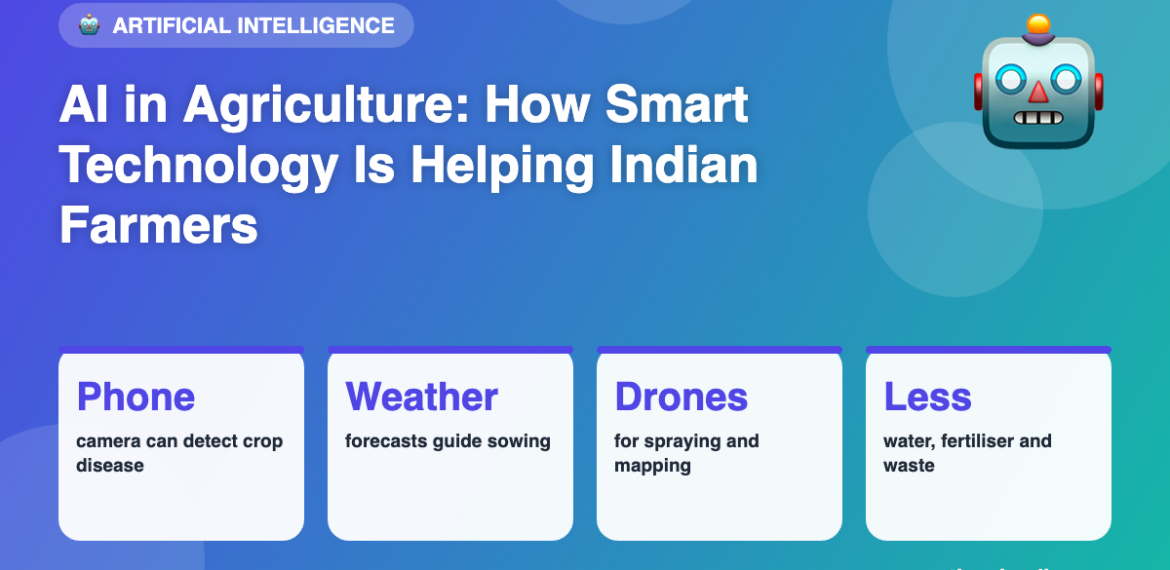
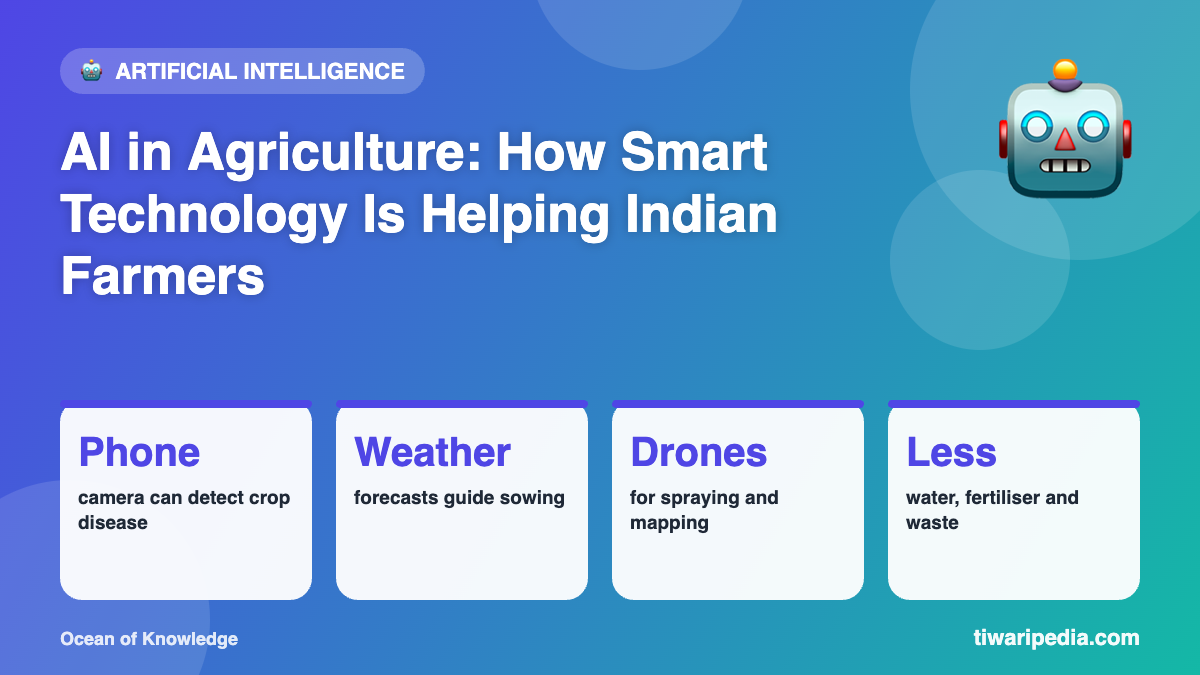
AI apps let farmers take a photo of a sick leaf with a smartphone. The app compares it with thousands of images and suggests the likely disease or pest and possible remedies, often in local languages.
2. Smarter weather and sowing advice
AI models combine weather data, satellite images and soil information to give farmers advice on the best time to sow, irrigate and harvest. Advisory messages can be sent by SMS or voice calls in regional languages.
3. Precision farming
- Soil sensors measure moisture and nutrients.
- AI analyses the data to recommend exactly how much water and fertiliser each part of a field needs.
- This saves money, conserves water and reduces chemical runoff.
4. Drones
Agricultural drones can spray pesticides and nutrients evenly and quickly, and map fields to spot problem areas. India has been promoting drone use in farming, including training women’s self-help groups as drone operators.
5. Satellite monitoring
Satellite images analysed by AI can estimate crop area, health and expected yields over large regions, helping governments plan and insurers assess crop losses faster.
6. Market prices and supply chains
AI tools can forecast crop prices and demand, helping farmers decide when and where to sell, and helping reduce post-harvest waste.
Challenges
- Many small farmers have limited internet access or digital skills.
- Advice must suit local soils, crops and languages.
- Farmers’ data must be protected and used fairly.
With the right support, AI can help Indian farmers increase yields, cut costs and adapt to a changing climate.




