

Last updated: October 2026 · 13 min read
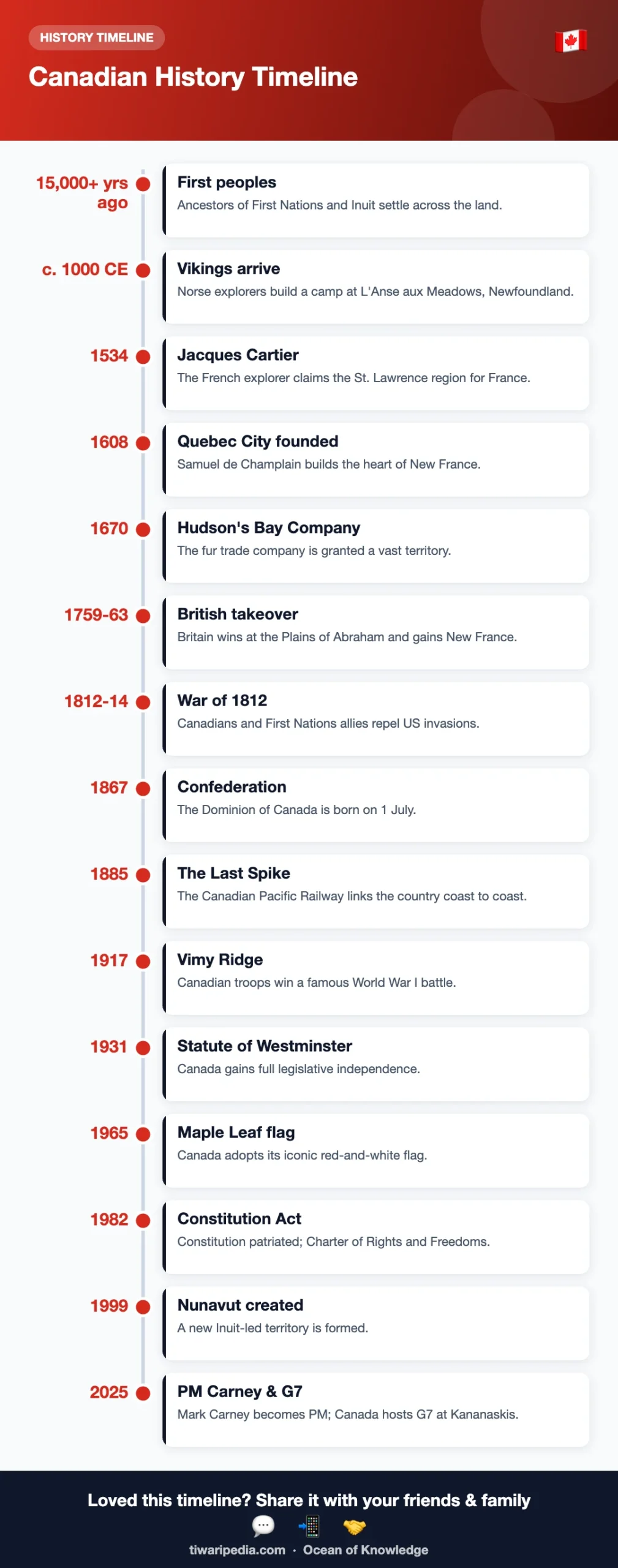
Canada is the world’s second-largest country by area, stretching from the Atlantic to the Pacific and up to the Arctic. Its history is a meeting of three founding peoples: Indigenous nations who lived here for thousands of years, French settlers who built New France, and British colonists. Canada became a country through peaceful negotiation rather than revolution, and today it is known for diversity, democracy and stunning natural beauty. This guide covers the full history of Canada, with a Canadian history timeline infographic and Canada’s strong links with India.
Canada: quick facts
| Capital | Ottawa |
|---|---|
| Largest city | Toronto |
| Confederation | 1 July 1867 (Canada Day) |
| Government | Federal parliamentary democracy and constitutional monarchy; 10 provinces and 3 territories |
| Head of state | King Charles III, represented by the Governor General |
| Prime Minister | Mark Carney (since March 2025) |
| Population | About 41 million |
| Official languages | English and French |
| Currency | Canadian dollar (CAD) |
| G7 membership | Since 1976 (the seventh member) |
In this article
- Indigenous peoples
- Vikings and European explorers
- New France
- British North America
- Confederation and nation-building
- The world wars and independence
- Modern Canada
- Timeline infographic
- FAQs
1. Indigenous peoples (before 1500)
People have lived in what is now Canada for at least 15,000 years. They developed very different ways of life suited to the land:
- Pacific coast nations such as the Haida built cedar plank houses and carved totem poles, living on salmon and sea resources.
- Plains peoples such as the Blackfoot hunted bison.
- The Haudenosaunee (Iroquois) and Huron-Wendat farmed corn, beans and squash around the Great Lakes.
- The Inuit adapted to the Arctic with igloos, kayaks and dog sleds.
Today, Canada officially recognises three groups of Indigenous peoples: First Nations, Inuit and Métis.
2. Vikings and European explorers (1000–1600)
Around 1000 CE, Norse Vikings led by Leif Erikson reached Newfoundland and built a settlement at L’Anse aux Meadows, the only confirmed Viking site in North America and a UNESCO World Heritage Site. They left after a few years.
In 1497, John Cabot, sailing for England, reached Newfoundland’s rich fishing grounds. In 1534, French explorer Jacques Cartier sailed into the Gulf of St. Lawrence and claimed the land for France. He used the Iroquoian word “kanata” (village or settlement), which gave Canada its name.
3. New France (1608–1763)
In 1608, Samuel de Champlain founded Quebec City, the heart of the colony of New France. Montreal followed in 1642. The colony’s economy was built on the fur trade, especially beaver pelts for European hats, which depended on partnerships with First Nations. French explorers and fur traders (voyageurs) travelled deep into the continent.
England’s Hudson’s Bay Company, founded in 1670, controlled a vast territory around Hudson Bay called Rupert’s Land. Britain and France fought repeatedly for control of North America. In the Seven Years’ War, the British under General Wolfe defeated the French under Montcalm at the Battle of the Plains of Abraham in 1759, outside Quebec City. With the Treaty of Paris (1763), New France became British.
4. British North America (1763–1867)
The Quebec Act (1774) allowed French Canadians to keep their language, Catholic faith and civil law, a key reason Quebec’s culture survives today. After the American Revolution, tens of thousands of Loyalists who stayed loyal to Britain moved north, settling in Nova Scotia, New Brunswick and Ontario.
During the War of 1812, the United States invaded, but British troops, Canadian militia and First Nations allies led by Tecumseh pushed them back. Rebellions in Upper and Lower Canada in 1837–38 led to reforms and, eventually, responsible government (an elected assembly controlling the cabinet) in the 1840s.
5. Confederation and nation-building (1867–1914)
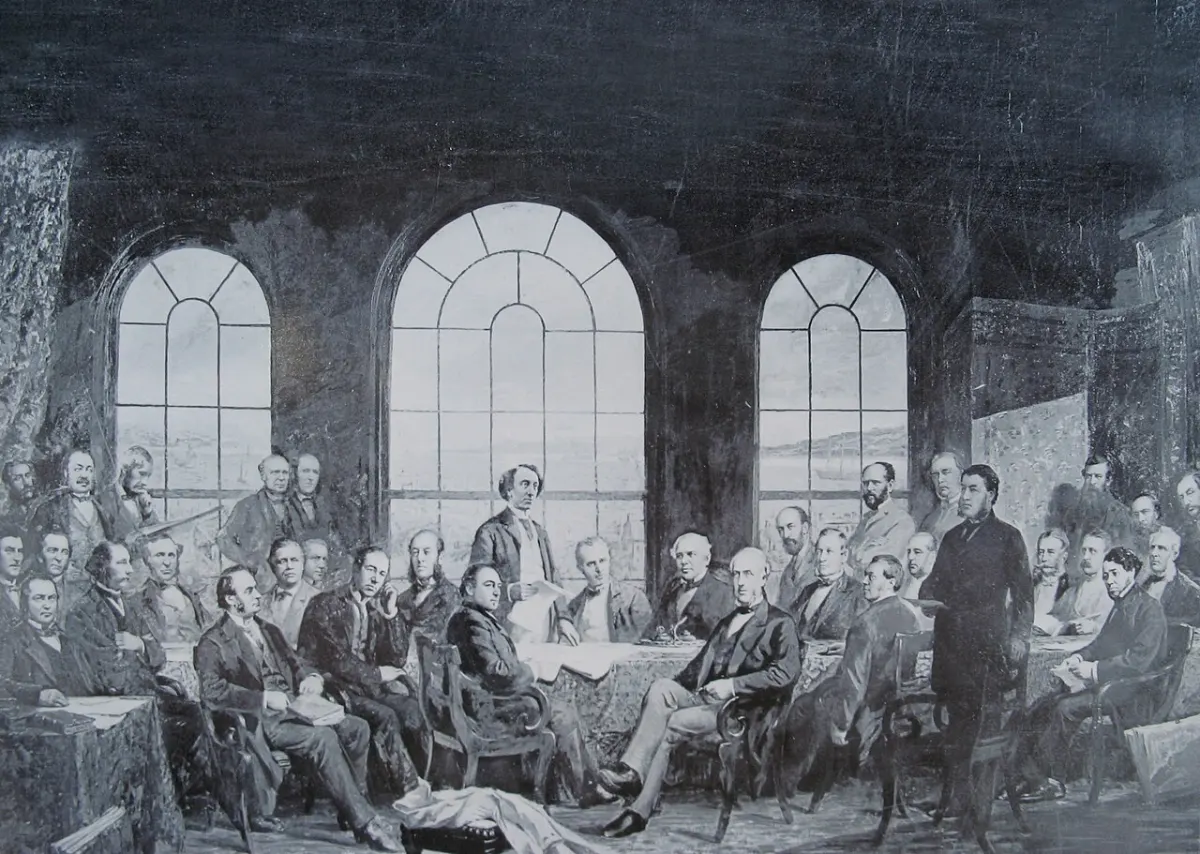
Worried about American expansion and needing to build railways and trade, colonial leaders met at Charlottetown and Quebec City in 1864. The British North America Act created the Dominion of Canada on 1 July 1867, uniting Ontario, Quebec, Nova Scotia and New Brunswick. Sir John A. Macdonald became the first Prime Minister.
- 1870: Canada bought Rupert’s Land from the Hudson’s Bay Company; Manitoba joined after the Red River Resistance led by Métis leader Louis Riel.
- 1871: British Columbia joined on the promise of a railway.
- 1885: the “Last Spike” of the Canadian Pacific Railway was driven at Craigellachie, BC, linking the country from coast to coast.
- 1896–99: the Klondike Gold Rush drew thousands to the Yukon.
- 1905: Alberta and Saskatchewan became provinces as immigrants settled the prairies.
Nation-building came at a heavy cost to Indigenous peoples. Under the Indian Act (1876) and the residential school system, which ran from the 1880s to 1996, about 150,000 Indigenous children were taken from their families. Canada has since apologised, and the Truth and Reconciliation Commission (2008–2015) documented this history.
6. The world wars and independence (1914–1945)
About 620,000 Canadians served in World War I. Their victory at Vimy Ridge in April 1917, when all four Canadian divisions fought together for the first time, is often seen as the moment Canada came of age as a nation. Women gained the federal vote in 1918.
The Statute of Westminster (1931) gave Canada full control over its own laws. In World War II, more than one million Canadians served; Canadian troops stormed Juno Beach on D-Day and helped liberate the Netherlands. Canada also built one of the world’s largest navies and air training programmes.
7. Modern Canada (1945–today)
- 1949: Newfoundland joined Canada; Canada became a founding member of NATO.
- 1957: Lester B. Pearson won the Nobel Peace Prize for creating UN peacekeeping.
- 1965: the red-and-white Maple Leaf flag was adopted.
- 1960s–70s: public health care (medicare) was introduced; Canada adopted official bilingualism (1969) and multiculturalism (1971).
- 1980 and 1995: Quebec voted in two referendums to remain in Canada; the 1995 result was extremely close (50.6% No).
- 1982: the Constitution Act brought Canada’s constitution home from Britain and added the Charter of Rights and Freedoms.
- 1999: Nunavut was created as an Inuit-majority territory.
- 2015–2025: Justin Trudeau served as Prime Minister.
- 2025: Mark Carney, a former governor of the Bank of Canada and the Bank of England, became Prime Minister; Canada hosted the G7 summit at Kananaskis, Alberta.

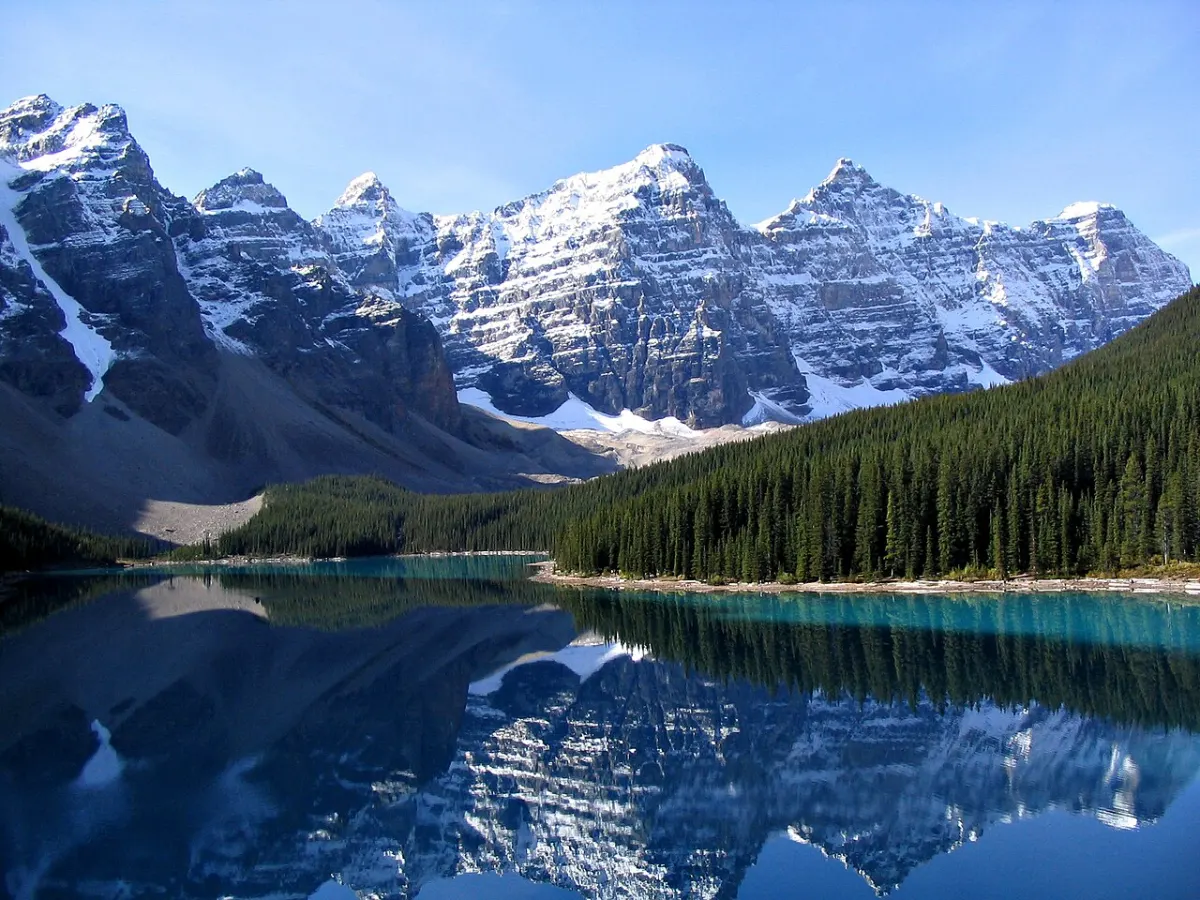
Canada’s natural landscapes, from the Rockies to Niagara Falls, attract millions of visitors, and its national parks, such as Banff (founded 1885, Canada’s first), are world famous.
Canadian history timeline (infographic)
Famous Canadian Prime Ministers
| Prime Minister | Term | Known for |
|---|---|---|
| Sir John A. Macdonald | 1867–73, 1878–91 | First PM, Confederation, CPR |
| Sir Wilfrid Laurier | 1896–1911 | First French-Canadian PM, prairie settlement |
| William Lyon Mackenzie King | 1921–26, 1926–30, 1935–48 | Longest-serving PM, WWII leader |
| Lester B. Pearson | 1963–1968 | Peacekeeping, Maple Leaf flag |
| Pierre Elliott Trudeau | 1968–79, 1980–84 | Charter of Rights, bilingualism |
| Justin Trudeau | 2015–2025 | Legalised cannabis, climate policies |
| Mark Carney | 2025–present | Current Prime Minister |
Canada and India
Indian immigration to Canada began in the early 1900s, mostly Sikh men from Punjab who settled in British Columbia. In 1914, the ship Komagata Maru, carrying 376 passengers from British India, was refused entry at Vancouver and forced to return; Canada formally apologised for this in 2016. Today, around 1.8 million people of Indian origin live in Canada, Indian students are among its largest international student groups, and Punjabi is one of the most spoken languages after English and French. Diplomatic tensions in 2023–24 were followed by steps in 2025 to restore normal ties.
Canada in the G7
Canada was not at the first summit in 1975 but joined in 1976 at the invitation of the United States, making the group the “Group of Seven”. It hosted the 2025 summit at Kananaskis, Alberta, where Prime Minister Narendra Modi attended as a guest. See all G7 countries and their history.
Frequently asked questions
When did Canada become a country?
On 1 July 1867, through Confederation. Canada gained full legislative independence in 1931 and brought its constitution home in 1982.
Where does the name “Canada” come from?
From the Iroquoian word “kanata”, meaning village or settlement, recorded by Jacques Cartier in 1535.
Why does Canada have two official languages?
Because of its French and British colonial history. Quebec remains mostly French-speaking, and the Official Languages Act of 1969 made both languages equal at the federal level.
Who was Canada’s first Prime Minister?
Sir John A. Macdonald, who took office on 1 July 1867.
Is Canada still part of the British monarchy?
Yes. Canada is an independent country, but King Charles III is its head of state, represented by the Governor General.
Explore the history of other G7 countries
- History of the United States
- History of the United Kingdom
- History of France
- History of Germany
- History of Italy
- History of Japan
- G7 countries: list, members and history
Related reading on Tiwaripedia
- World War II in brief
- India’s freedom struggle: 1857 to 1947
- 10 incredible facts about Mount Everest
- More country-wise history
Facts are based on widely accepted historical sources at the time of writing. Images are from Wikimedia Commons under the licences credited in each caption. Spotted something that needs updating? Let us know.
Keep reading on Tiwaripedia
- The Chola Dynasty: India’s Great Naval Empire and Temple Builders
- 12 Incredible Facts About the Olympic Games
- History of Germany: German History Timeline From the Holy Roman Empire to Reunification
- Indus Valley Civilization: Cities, Town Planning, Trade, Script and Decline
- The Silk Road: History of the World’s Most Famous Trade Route
- 12 Incredible Facts About the Taj Mahal
More guides: All Country-wise History articles
