

Every major technology, from the steam engine to the computer, has changed how people work. Artificial intelligence is the latest, and it raises a common question: will AI take our jobs?
Tasks, not just jobs
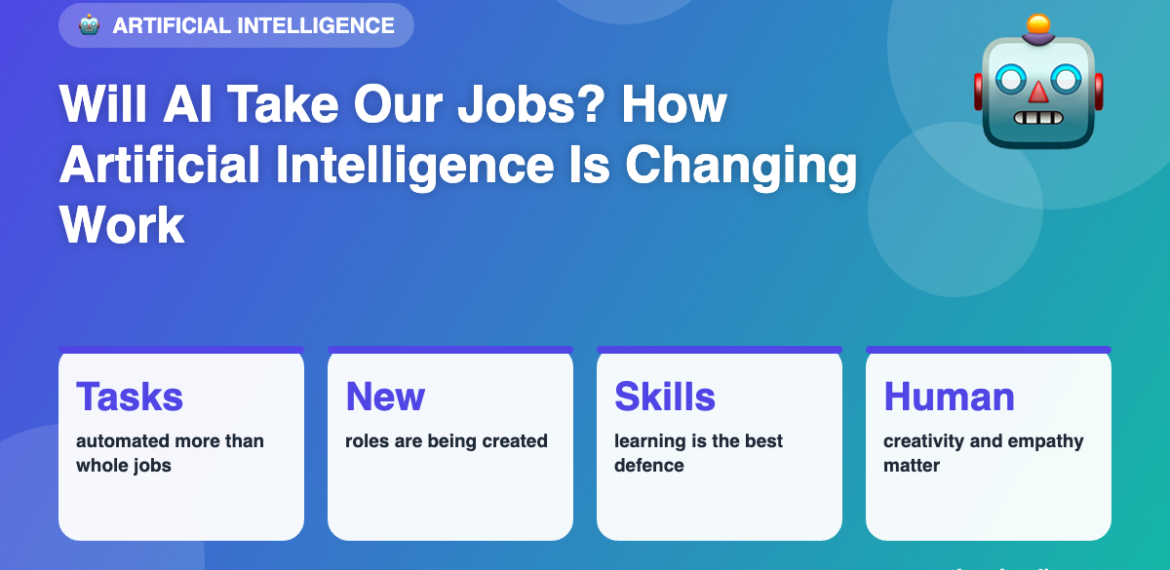
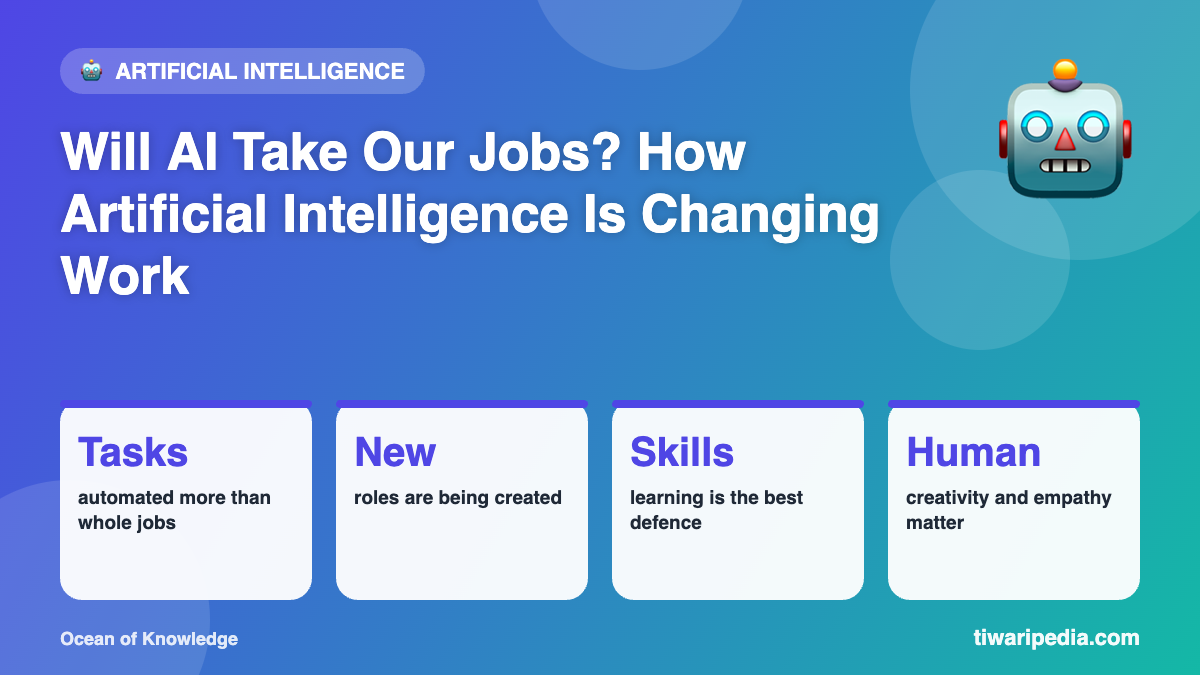
Most jobs are made up of many tasks. AI is very good at some of them, such as summarising documents, answering routine questions, sorting data or drafting text, and less good at others. In many cases, AI will change jobs by taking over certain tasks rather than replacing entire roles.
Work likely to be affected
- Routine data entry and processing.
- Basic customer support and call centre work.
- Simple writing, translation and content tasks.
- Some coding, accounting and administrative tasks.
Work that relies on human strengths
- Jobs needing empathy and care: nursing, teaching, counselling.
- Skilled hands-on trades: electricians, plumbers, mechanics.
- Leadership, negotiation and complex judgement.
- Creativity that combines original ideas with human insight.
New jobs are being created
AI is also creating roles such as AI trainers, data analysts, AI product managers, prompt and workflow designers, AI safety specialists and people who help businesses adopt AI.
Skills that will matter
- Using AI tools well: knowing how to ask, check and improve AI output.
- Critical thinking: judging whether information is correct.
- Communication and teamwork.
- Digital and data skills.
- Adaptability: willingness to keep learning.
What can you do now?
- Try AI tools in your own work and learn their strengths and limits.
- Take short online courses in AI and digital skills, many of which are free.
- Focus on skills that combine your expertise with AI, rather than competing against it.
The future of work will depend on choices made by businesses, governments and individuals. People who learn to work alongside AI will be best placed to benefit.




