

AI chatbots can answer questions, explain topics, draft emails, translate and write code. Behind them are large language models (LLMs). Here is a simple look at how they work.
Learning from huge amounts of text
An LLM is a very large neural network trained on enormous amounts of text, such as books, articles and websites. During training, it learns patterns of language: grammar, facts, styles of writing and how ideas connect.
Predicting the next piece of text
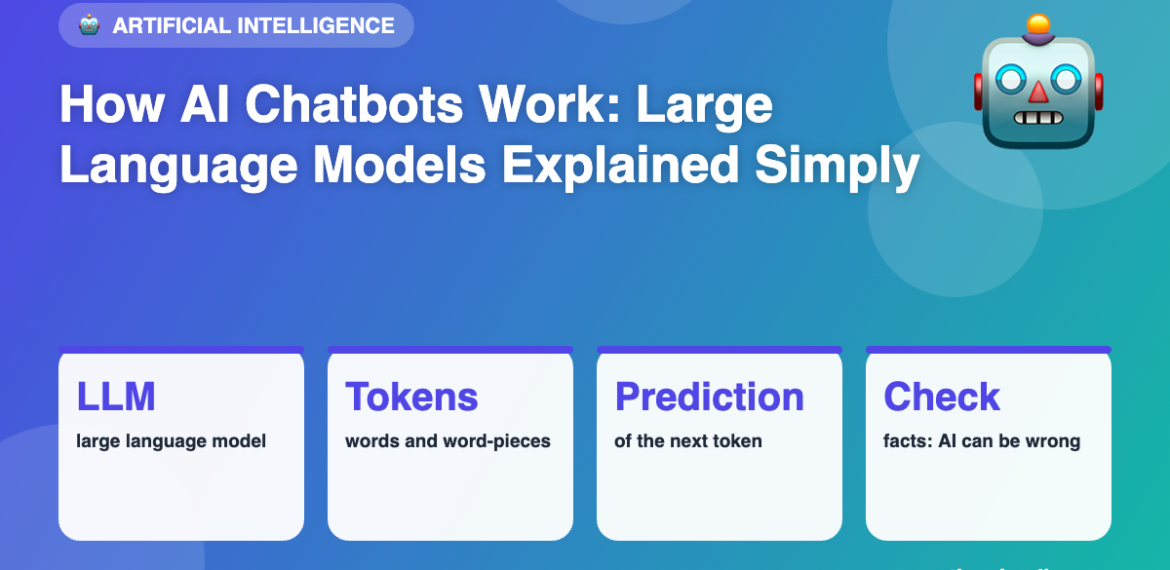
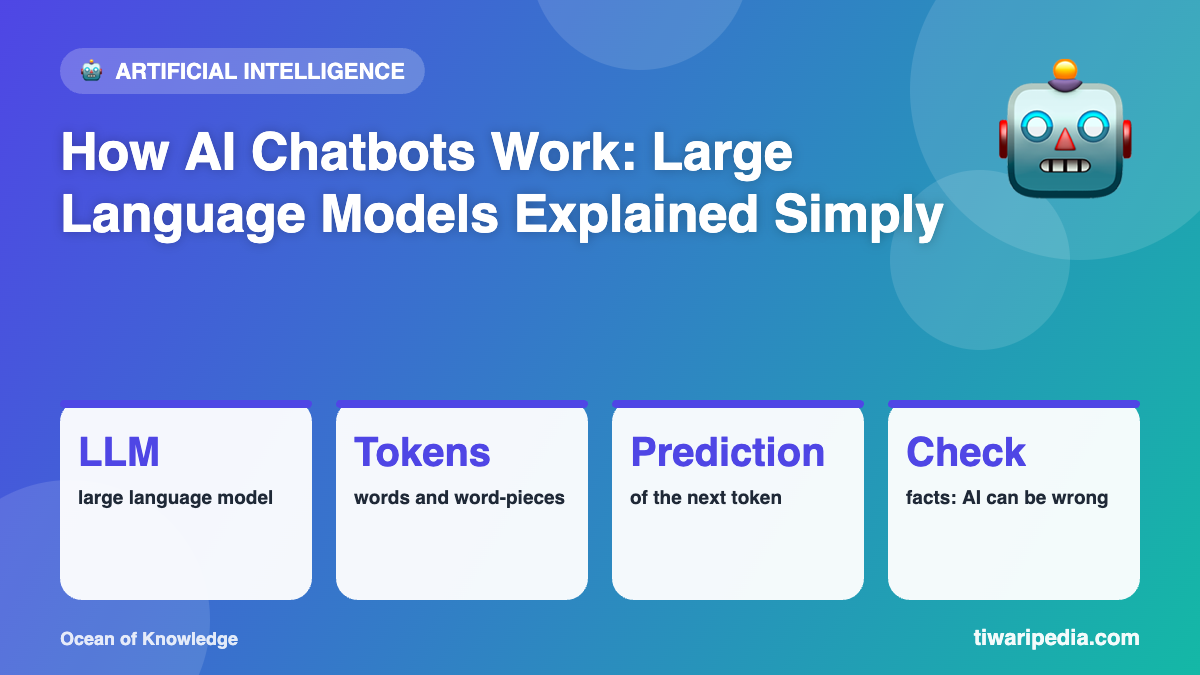
Text is broken into small pieces called tokens (words or parts of words). At its core, the model learns to predict the next token given everything before it. Repeating this prediction over and over generates whole sentences and paragraphs. Because it has learned so many patterns, the results can be remarkably fluent and useful.
Making it helpful
After initial training, models are further trained with human feedback and examples of good answers, so they follow instructions, answer helpfully and avoid harmful content.
Why do chatbots make mistakes?
- They generate text that sounds plausible, which is not always the same as true. Confident but incorrect answers are sometimes called “hallucinations”.
- Their knowledge may be out of date unless they can search the web.
- They can reflect biases present in their training data.
How to use AI chatbots well
- Be specific: explain what you want, who it is for and the format.
- Give context and examples.
- Ask follow-up questions to refine answers.
- Verify important facts, especially for health, legal, financial or news topics.
- Protect privacy: do not share passwords, bank details or sensitive personal data.
What can they help with?
Brainstorming, summarising long documents, learning new subjects, drafting messages, translating, coding and practising languages. They work best as assistants, with a human checking the final result.




