

Before television and smartphones, the radio was the voice of the nation. Even today it reaches remote villages, fishing boats and farmers’ fields where other media cannot.
Early days
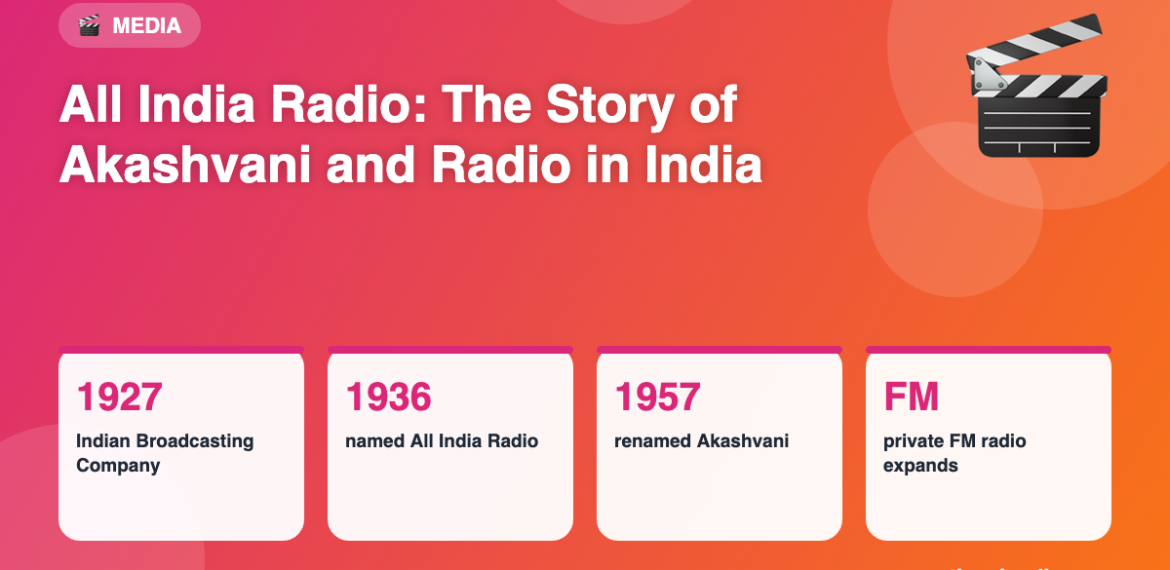
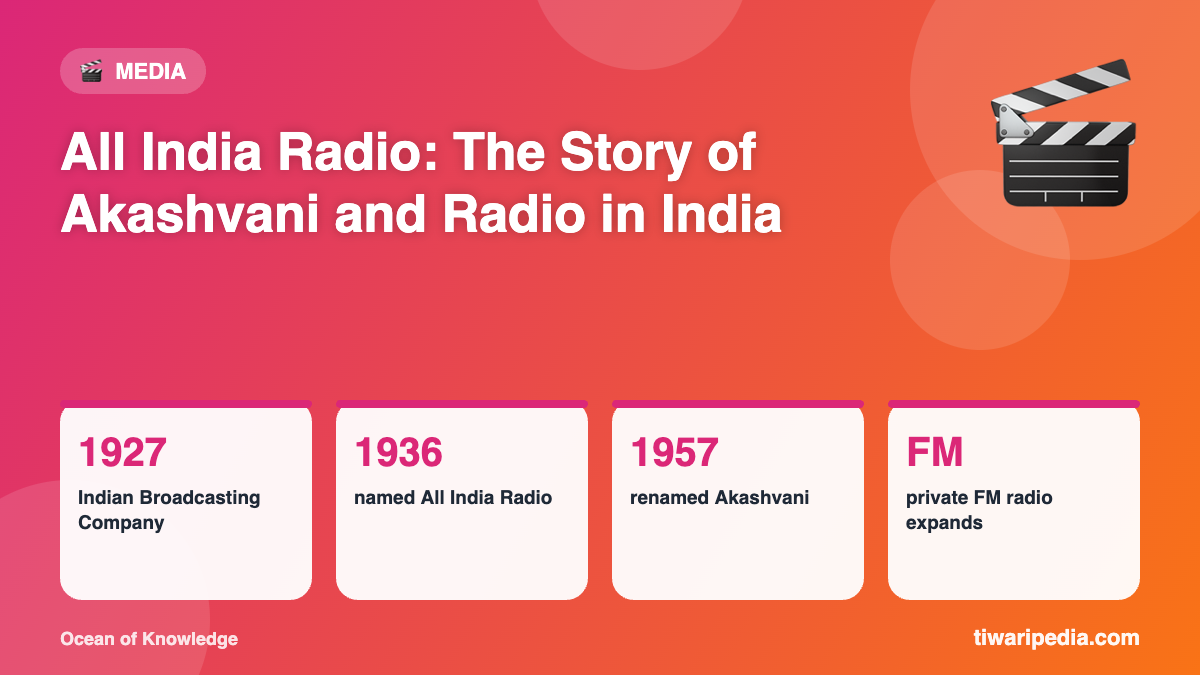
Radio clubs began broadcasting in Bombay and Calcutta in the early 1920s. In 1927, the private Indian Broadcasting Company started stations in Bombay and Calcutta. After it ran into losses, the government took over broadcasting in 1930.
All India Radio
In 1936, the service was named All India Radio (AIR). In 1957 it was also given the name Akashvani, meaning “voice from the sky”, a name suggested by poet Rabindranath Tagore’s earlier usage.
Radio and freedom
During the Quit India Movement of 1942, freedom fighters including Usha Mehta ran a secret Congress Radio station to spread news the British had censored. On 14–15 August 1947, AIR broadcast Jawaharlal Nehru’s famous “Tryst with Destiny” speech.
Nation-building
- Vividh Bharati (from 1957) brought popular film music and entertainment.
- Programmes on farming, health and education reached rural India.
- Cricket commentary made radio a companion for millions of fans.
- News bulletins in many Indian languages.
FM revolution
FM radio offered clearer sound. From the 2000s, private FM stations spread across cities with music, talk shows and local updates.
Community radio
Small community radio stations run by universities, NGOs and local groups broadcast in local dialects on issues that matter to their communities.
Radio today
Radio is now available through mobile phones and apps, and AIR operates hundreds of stations covering most of India’s population. It remains vital during disasters such as cyclones and floods, when power and mobile networks fail.




