

India produces more films each year than almost any other country, in dozens of languages. Its journey began more than a century ago.
The silent era
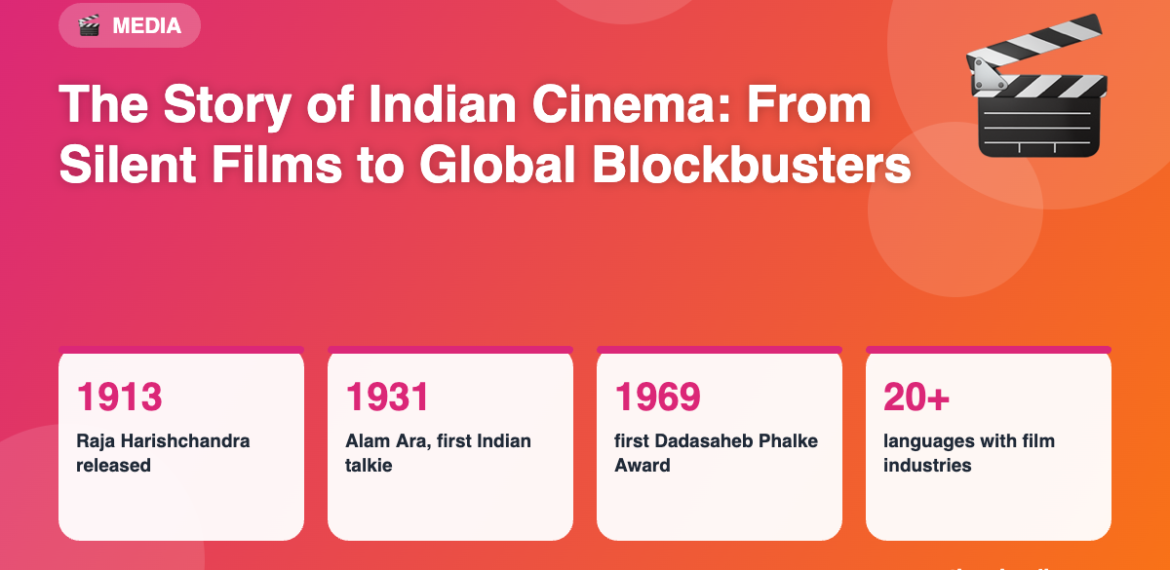
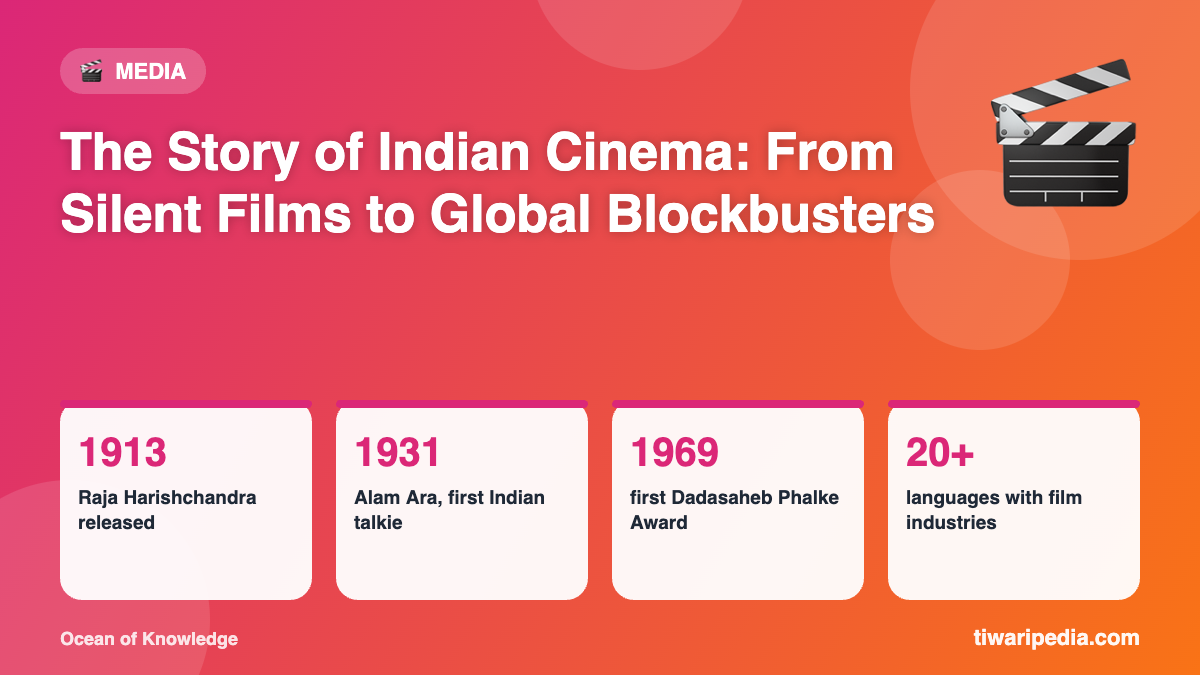
In 1913, Dadasaheb Phalke released Raja Harishchandra, India’s first full-length feature film. It was silent, and because women did not act in films then, male actors played female roles. Phalke is honoured as the “Father of Indian Cinema”.
The talkies arrive
In 1931, Ardeshir Irani’s Alam Ara became India’s first sound film. Songs became central to Indian films from the start, a tradition that continues today.
The golden age (1940s–1960s)
Filmmakers such as Raj Kapoor, Guru Dutt, Bimal Roy and Mehboob Khan made classics. Satyajit Ray’s Pather Panchali (1955) earned global acclaim and launched India’s art cinema movement.
Many industries, one cinema
“Bollywood” (Hindi films from Mumbai) is only one part. India has major film industries in Tamil, Telugu, Malayalam, Kannada, Bengali, Marathi, Punjabi, Gujarati and other languages. In recent years, South Indian films have achieved huge pan-India and international success.
Key milestones
- 1954: National Film Awards began.
- 1969: the first Dadasaheb Phalke Award, India’s highest film honour, given to actress Devika Rani.
- 1992: Satyajit Ray received an honorary Oscar.
- Indian films and songs have since won multiple international awards, including Oscars.
From theatres to streaming
Indian cinema has moved from single-screen halls to multiplexes and now to streaming platforms, giving new filmmakers and regional stories a nationwide audience.
Why Indian cinema matters
- It employs lakhs of people, from actors to technicians.
- It shapes fashion, music, language and popular culture.
- It is a powerful form of soft power, loved in many countries across Asia, Africa, the Middle East and beyond.




