Last updated: October 2026 · 3 min read
Term insurance is the simplest and cheapest form of life insurance. You pay a premium for a fixed period (term); if you die during the term, your family gets the sum assured. If you survive, nothing is paid (unless you choose a return-of-premium plan).
Why term insurance matters
If you have dependants or loans, your income is their safety net. Term insurance replaces that income if something happens to you, so your family can pay the home loan, run the household and educate children.
How much cover do you need?
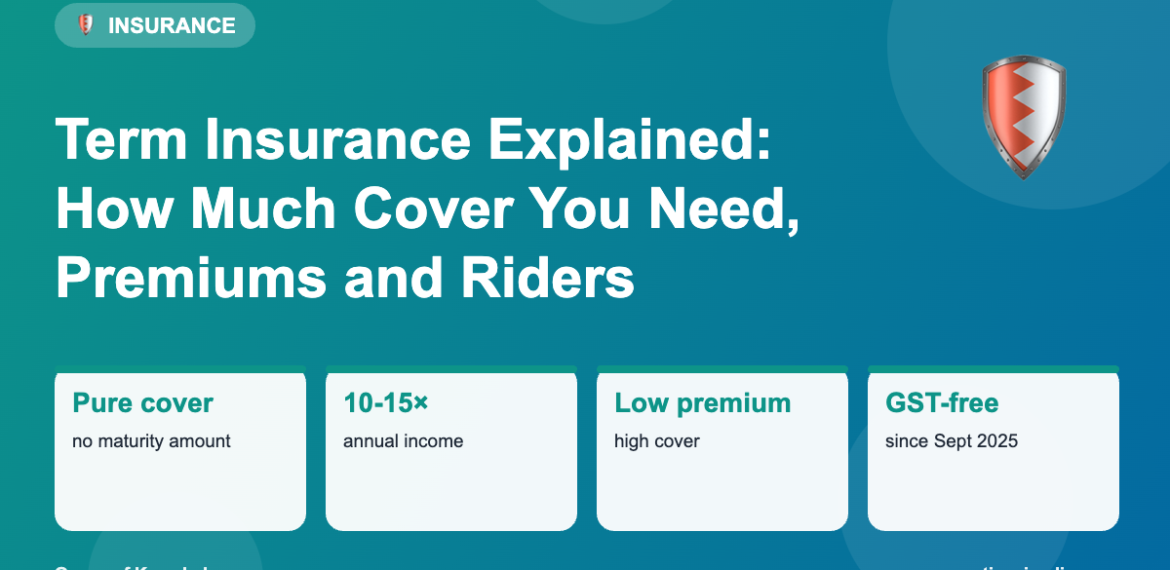
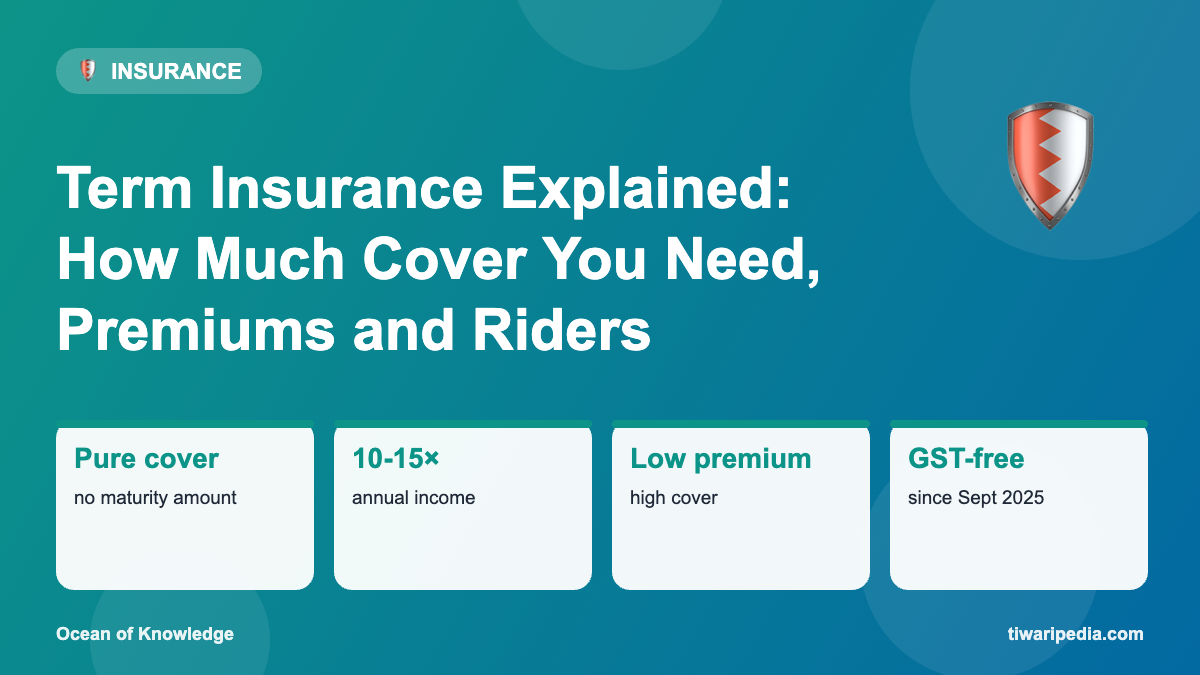
A common rule is 10-15 times your annual income, plus outstanding loans, minus existing savings and insurance. Example: income ₹10 lakh, home loan ₹40 lakh, savings ₹10 lakh → cover of about ₹1.3-1.8 crore.
What decides your premium
- Age: buying young locks in lower premiums.
- Health: medical tests, BMI and existing conditions.
- Smoking and tobacco use (premiums are much higher).
- Sum assured and policy term.
- Gender (women often pay slightly less).
- Riders you add.
Useful riders
| Rider | What it adds |
|---|---|
| Accidental death benefit | Extra payout if death is due to an accident |
| Critical illness | Lump sum on diagnosis of listed illnesses |
| Waiver of premium | Future premiums waived on disability or critical illness |
| Terminal illness | Advance payout on terminal diagnosis |
How to choose a good policy
- Check the insurer’s claim settlement ratio and amount settled ratio over several years.
- Choose a term till about age 60-65, when dependants are independent.
- Disclose all health details honestly; non-disclosure can lead to claim rejection.
- Add your spouse as nominee or use MWPA (Married Women’s Property Act) to protect the payout.
- Compare premiums online.
Tax and GST
Since 22 September 2025, GST on individual life insurance premiums, including term plans, has been exempted. Under the old tax regime, premiums qualify for deduction within the ₹1.5 lakh limit (80C, renumbered in the new Act), and death benefits are tax-free.
Frequently asked questions
Is term insurance a waste if I survive?
No. Like car insurance, it buys protection; the low premium is the cost of financial security for your family.
What is return-of-premium term insurance?
A plan that refunds premiums if you survive the term, but it costs much more than a pure term plan.
Can I have more than one term policy?
Yes. You must disclose existing policies; insurers assess total cover against your income.
Keep exploring
- Health insurance basics
- Types of life insurance
- Emergency fund guide
- More Insurance articles on Tiwaripedia
This article is for general information, not financial, tax or legal advice. Rates, limits and rules change; always confirm on the official website or with a qualified advisor before you act. Spotted something that needs updating? Let us know.