

Last updated: October 2026 · 3 min read
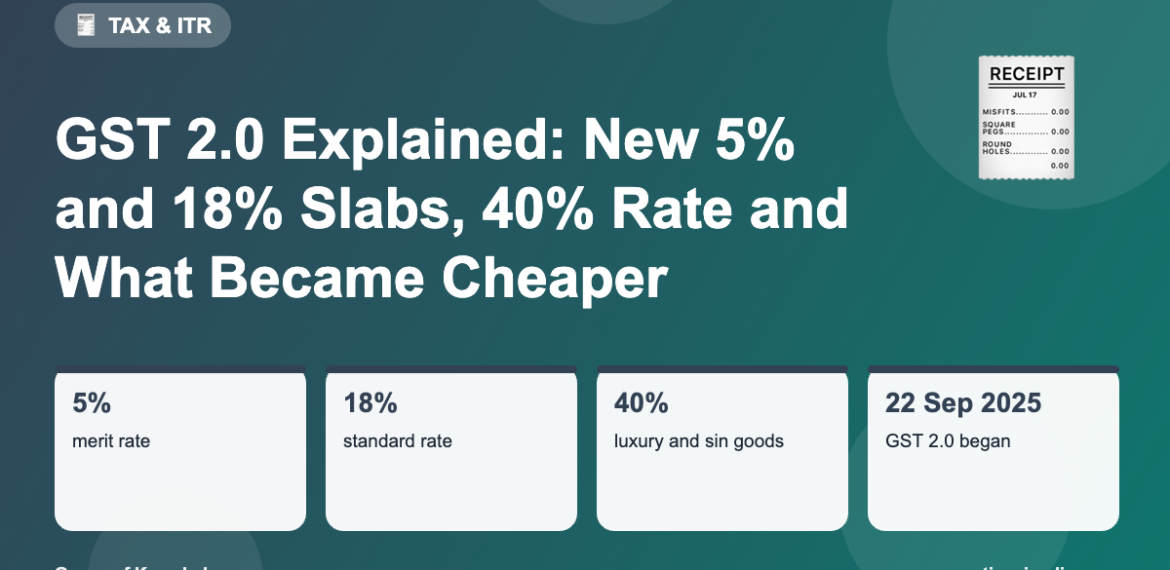
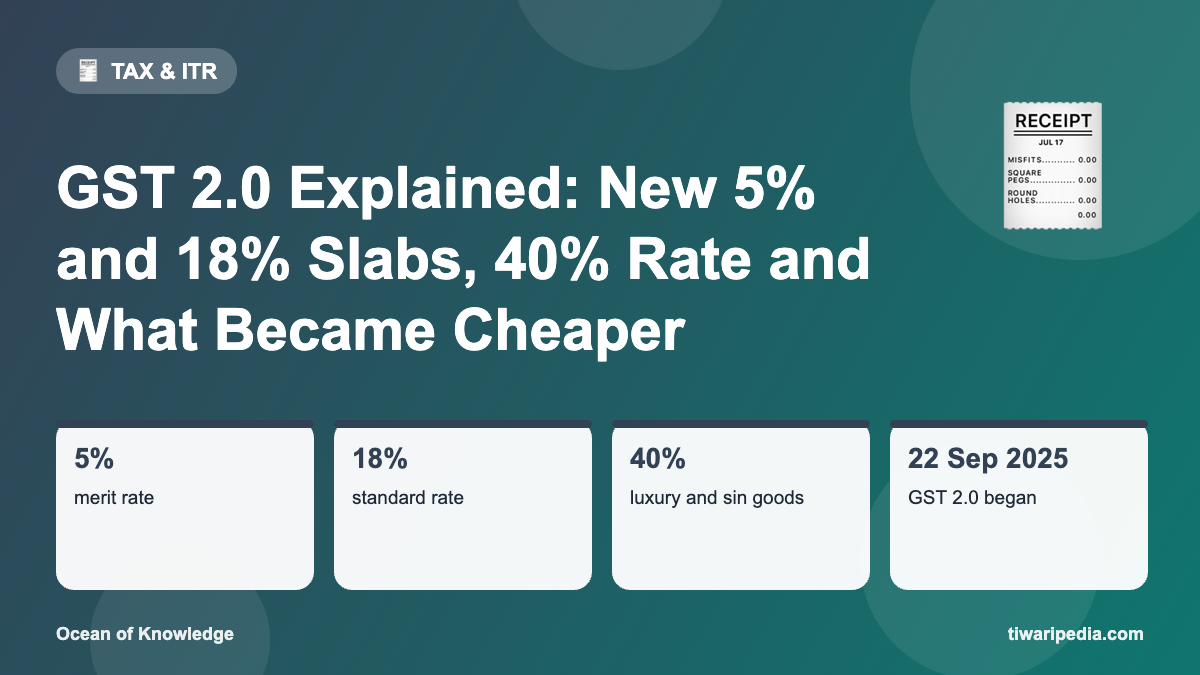
From 22 September 2025, India moved to GST 2.0: most goods and services now fall into two main slabs, 5% and 18%, replacing the earlier four-slab system of 5%, 12%, 18% and 28%. A special 40% rate applies to luxury and sin goods.
Old vs new structure
| Before 22 Sept 2025 | GST 2.0 | |
|---|---|---|
| Main slabs | 5%, 12%, 18%, 28% | 5% and 18% |
| Special rate | 28% + compensation cess | 40% for luxury and sin goods |
| Essentials | 0% or 5% | 0% or 5% |
| Individual life and health insurance | 18% | Exempt (0%) |
What became cheaper (examples)
- Many daily-use items such as soaps, shampoos, toothpaste and packaged foods moved to 5%.
- Items like ACs, TVs above 32 inches, dishwashers and small cars moved from 28% to 18%.
- Many medicines and medical devices moved to 5% or nil.
- Individual life and health insurance premiums became GST-free.
- Cinema tickets up to ₹100 moved to 5%.
What attracts 40%
Luxury and “sin” goods, such as pan masala, aerated and sugary drinks, large luxury cars and motorcycles above 350 cc, attract 40%. Tobacco products continued under their earlier rate plus cess for a transition period linked to repaying compensation cess loans.
How GST works (quick recap)
GST is a destination-based tax on supply of goods and services. Within a state, it is split into CGST and SGST; between states it is IGST. Businesses claim input tax credit for GST paid on purchases, so tax is paid only on value added. Registration is generally required above ₹40 lakh turnover for goods (₹20 lakh for services; lower in special category states).
What it means for you
Lower rates on many household items and insurance reduce monthly costs, provided businesses pass on the cut. If you run a business, update billing software, product tax codes (HSN) and price lists, and watch for further GST Council notifications.
Frequently asked questions
When did GST 2.0 start?
On 22 September 2025, after the 56th GST Council meeting approved the changes.
Is health insurance GST-free now?
Yes. Premiums on individual health and life insurance policies are exempt from GST under GST 2.0.
Are 12% and 28% slabs abolished?
For most goods, yes; items were moved to 5% or 18%, with a special 40% rate for select luxury and sin goods.
Keep exploring
- Income Tax Act 2025 explained
- Health insurance basics
- How box office collection works
- More Tax & ITR articles on Tiwaripedia
This article is for general information, not financial, tax or legal advice. Rates, limits and rules change; always confirm on the official website or with a qualified advisor before you act. Spotted something that needs updating? Let us know.




