

Last updated: October 2026 · 3 min read
When you sell shares or mutual fund units at a profit, the gain is taxed as capital gains. The rates changed from 23 July 2024 and continue for 2026-27. Here is a simple guide.
Equity shares and equity mutual funds
| Type | Holding period | Tax rate |
|---|---|---|
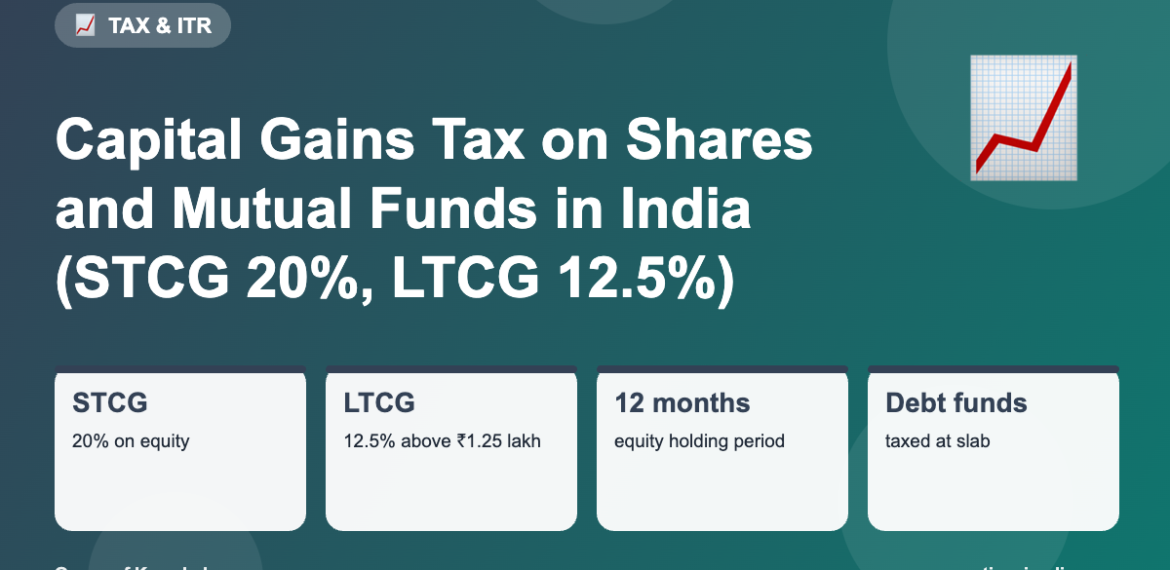
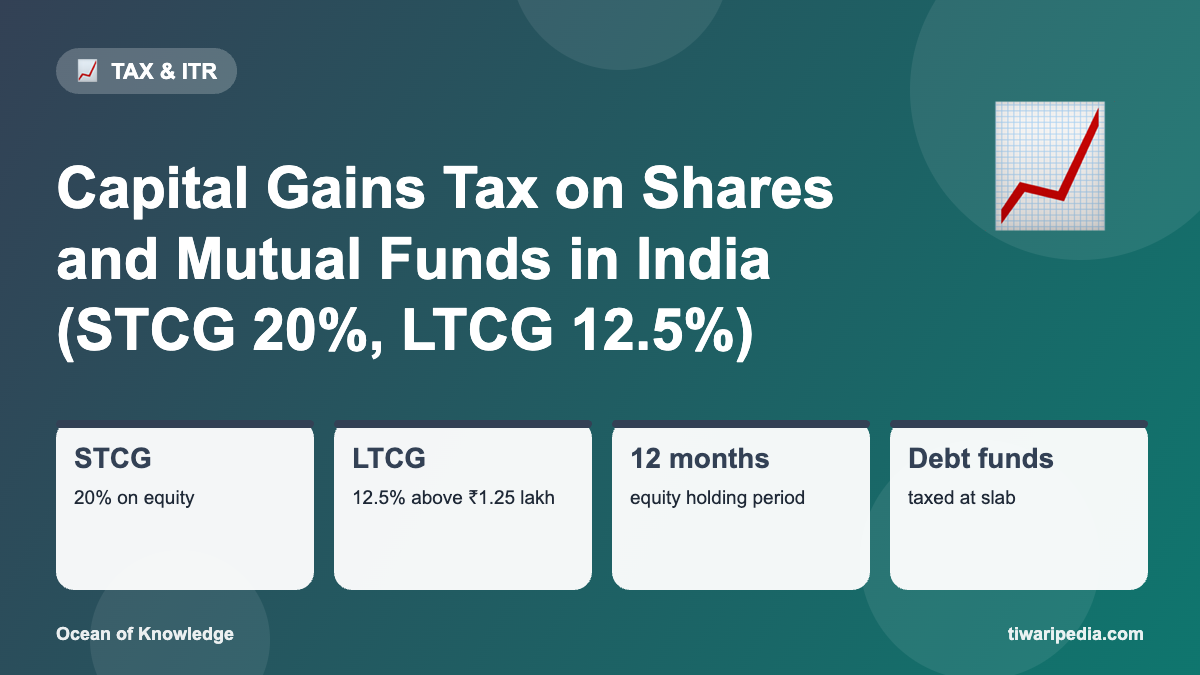
| Short-term capital gain (STCG) | 12 months or less | 20% |
| Long-term capital gain (LTCG) | More than 12 months | 12.5% on gains above ₹1.25 lakh per year |
These apply to listed shares and equity-oriented funds where Securities Transaction Tax (STT) is paid. Add 4% cess and any surcharge.
Debt mutual funds and other assets
| Asset | Rule |
|---|---|
| Debt mutual funds bought on or after 1 April 2023 | Gains taxed at your slab rate regardless of holding period |
| Gold, property, unlisted shares (long term) | 12.5% without indexation; for land or buildings bought before 23 July 2024, individuals may choose 20% with indexation if lower |
| Long-term holding period | 24 months for most non-equity assets; 12 months for listed securities |
Worked example
Priya invested ₹5 lakh in an equity mutual fund and sold after 2 years for ₹7.5 lakh. Her LTCG is ₹2.5 lakh. The first ₹1.25 lakh is exempt, so tax = 12.5% × ₹1.25 lakh = ₹15,625 (+ cess). Had she sold within 12 months, the full ₹2.5 lakh would be taxed at 20% = ₹50,000.
Ways to reduce capital gains tax legally
- Hold equity for more than 12 months to get the lower LTCG rate.
- Tax-gain harvesting: book up to ₹1.25 lakh of LTCG each year and reinvest.
- Set off losses: short-term losses can be set off against both STCG and LTCG; long-term losses only against LTCG; unused losses can be carried forward for 8 years if you file on time.
- For property, look at reinvestment exemptions such as Sections 54 and 54EC (new section numbers apply from 2026-27).
Reporting in your ITR
Capital gains are reported in Schedule CG of ITR-2 or ITR-3. Brokers and AMCs provide capital gains statements, and gains also appear in your Annual Information Statement (AIS).
Frequently asked questions
Is the ₹12 lakh rebate available on capital gains?
No. The new-regime rebate does not cover tax on special-rate income such as STCG under 111A or LTCG under 112A.
How is SIP holding period calculated?
Each SIP instalment has its own purchase date, so the 12-month period is counted separately for each instalment (first-in, first-out).
Is there indexation on equity?
No. Equity LTCG never had indexation; the old grandfathering for gains before 31 January 2018 still applies.
Keep exploring
- SIP and mutual funds explained
- New vs old tax regime
- Power of compounding
- More Tax & ITR articles on Tiwaripedia
This article is for general information, not financial, tax or legal advice. Rates, limits and rules change; always confirm on the official website or with a qualified advisor before you act. Spotted something that needs updating? Let us know.




