

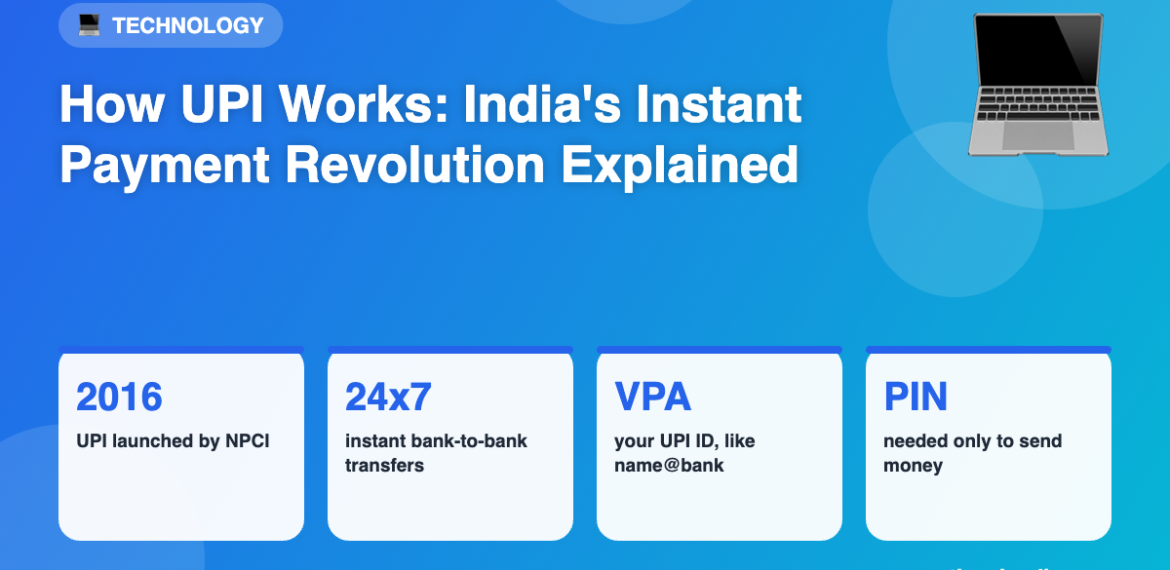
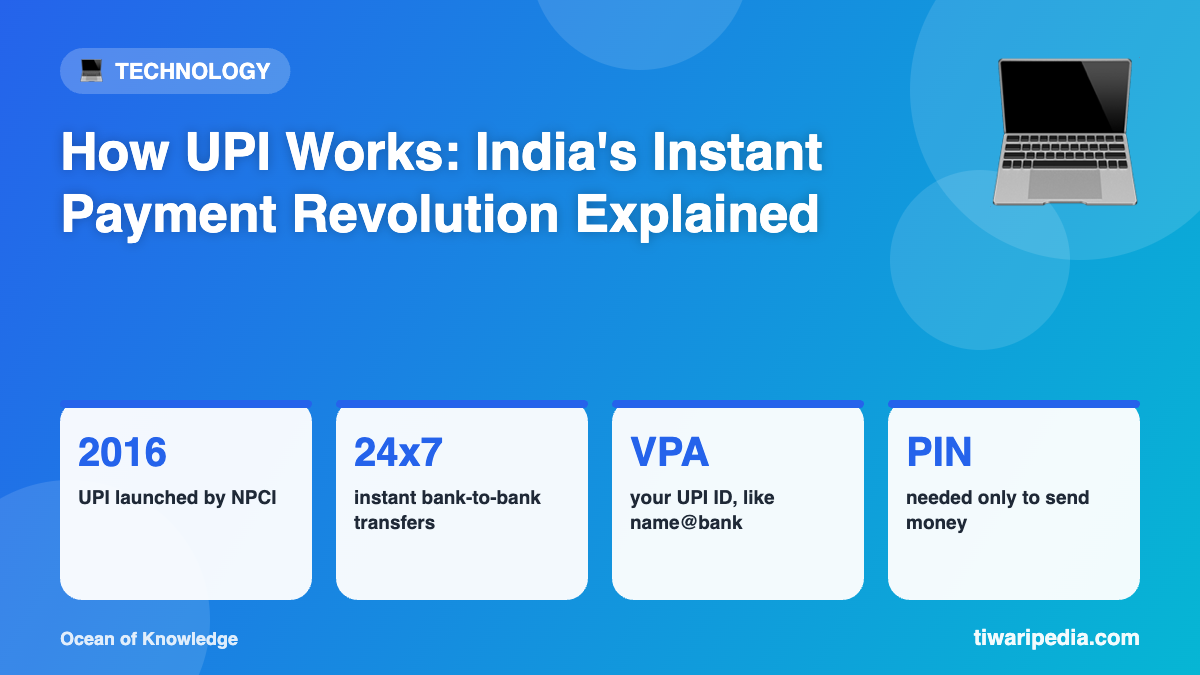
From tea stalls to shopping malls, India now runs on QR codes. The technology behind this is UPI (Unified Payments Interface), launched in 2016 by the National Payments Corporation of India (NPCI). It has made India a global leader in digital payments.
What is UPI?
UPI is a system that links your bank account to a mobile app, letting you send and receive money instantly, 24 hours a day, every day of the year. You can use apps from banks or from companies such as payment and messaging apps.
Key terms
- VPA / UPI ID: a simple address such as name@bankname that replaces your account number and IFSC code.
- UPI PIN: a secret 4- or 6-digit number that authorises payments.
- QR code: a scannable code containing the payee’s UPI ID.
What happens when you pay?
- You scan a QR code or enter a UPI ID and the amount.
- Your app sends the request to your bank through NPCI’s UPI network.
- You enter your UPI PIN, which is verified securely.
- Your bank debits your account and NPCI routes the money to the receiver’s bank.
- Both of you get a confirmation, usually within seconds.
Why UPI became so popular
- Free for most person-to-person and person-to-merchant payments.
- Works across all participating banks and apps.
- No need to share bank account numbers.
- Small shops can accept payments with just a printed QR code.
Stay safe: golden rules
- You never need your PIN to receive money. If someone asks you to enter your PIN to “receive” a payment, it is a fraud.
- Never share your UPI PIN or OTP with anyone, including people claiming to be bank staff.
- Check the name shown before you confirm a payment.
- Do not scan QR codes sent by strangers to “claim prizes”.
- Report fraud immediately to your bank and on the national cybercrime helpline 1930 or cybercrime.gov.in.




