The water you drink today may once have fallen as rain on a dinosaur. That is because Earth’s water is constantly recycled through the water cycle, also called the hydrological cycle.
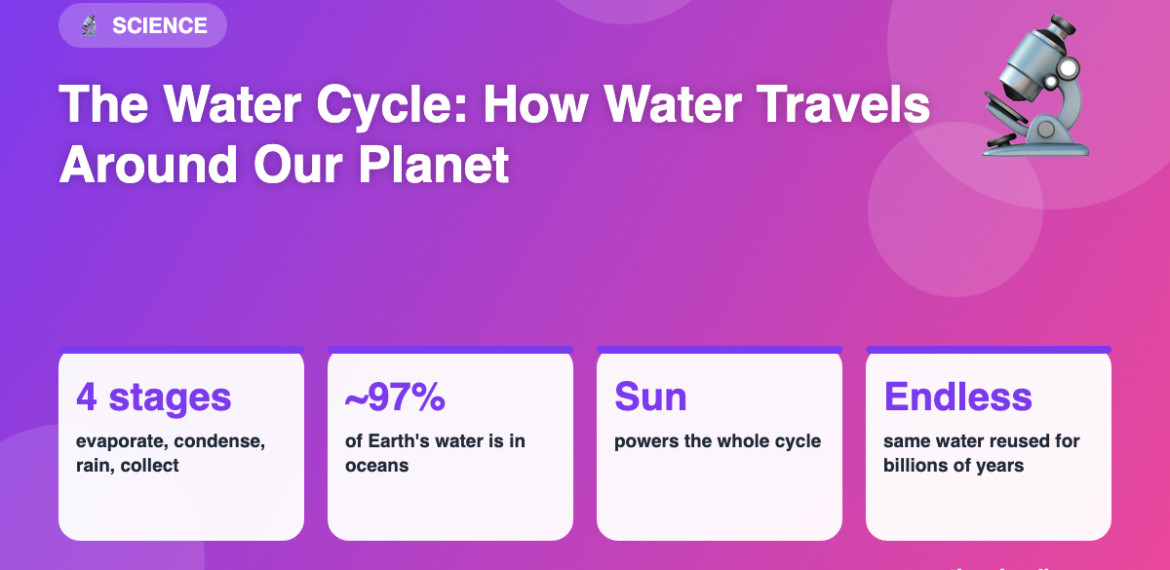
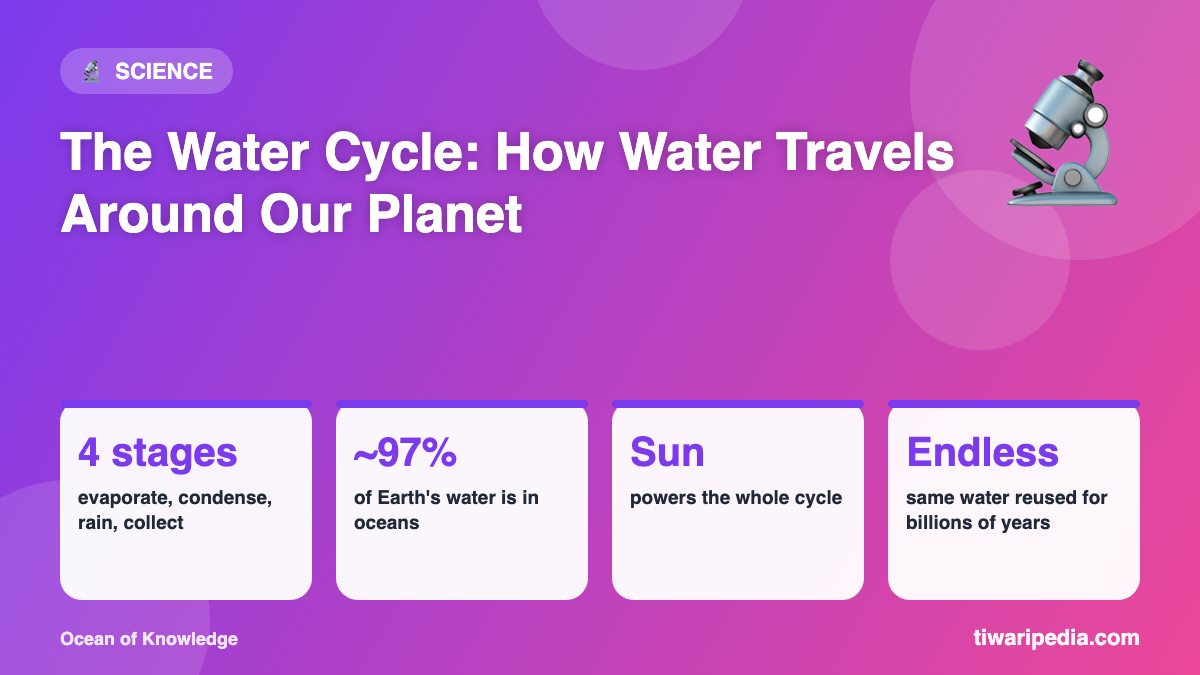
1. Evaporation
The Sun heats water in oceans, rivers and lakes, turning it into invisible water vapour that rises into the air. Plants also release water vapour from their leaves, a process called transpiration.
2. Condensation
As water vapour rises, it cools. Cool air cannot hold as much vapour, so the vapour condenses into tiny droplets around specks of dust, forming clouds and fog.
3. Precipitation
When cloud droplets join together and become too heavy, they fall as rain, snow, sleet or hail.
4. Collection
Fallen water collects in oceans, lakes and rivers, flows over land as runoff, or soaks into the ground to become groundwater. Eventually it evaporates again and the cycle continues.
Where is Earth’s water?
- About 97% is salty ocean water.
- Only about 3% is fresh water, and most of that is locked in glaciers and ice caps.
- Less than 1% is easily available fresh water in rivers, lakes and underground.
The water cycle and the Indian monsoon
India’s monsoon is a giant example of the water cycle. In summer, moist winds from the Indian Ocean and Arabian Sea carry evaporated water over the hot land, where it rises, cools and falls as heavy rain. This rain fills rivers and reservoirs and supports farming across the country.
Why it matters
- It supplies fresh water for drinking and farming.
- It shapes weather and climate.
- It carves valleys and moves nutrients around the planet.