

If you have saved photos to an online drive, watched a film on a streaming service or used email in a browser, you have used cloud computing. “The cloud” simply means computers in large data centres that you access over the internet.
A simple definition
Cloud computing is the delivery of computing services (servers, storage, databases, software and more) over the internet, so you do not have to own and maintain the hardware yourself.
An everyday comparison
Think of electricity. Most homes do not run their own power plant; they use electricity from the grid and pay for what they use. The cloud works the same way for computing power.
The three main service types
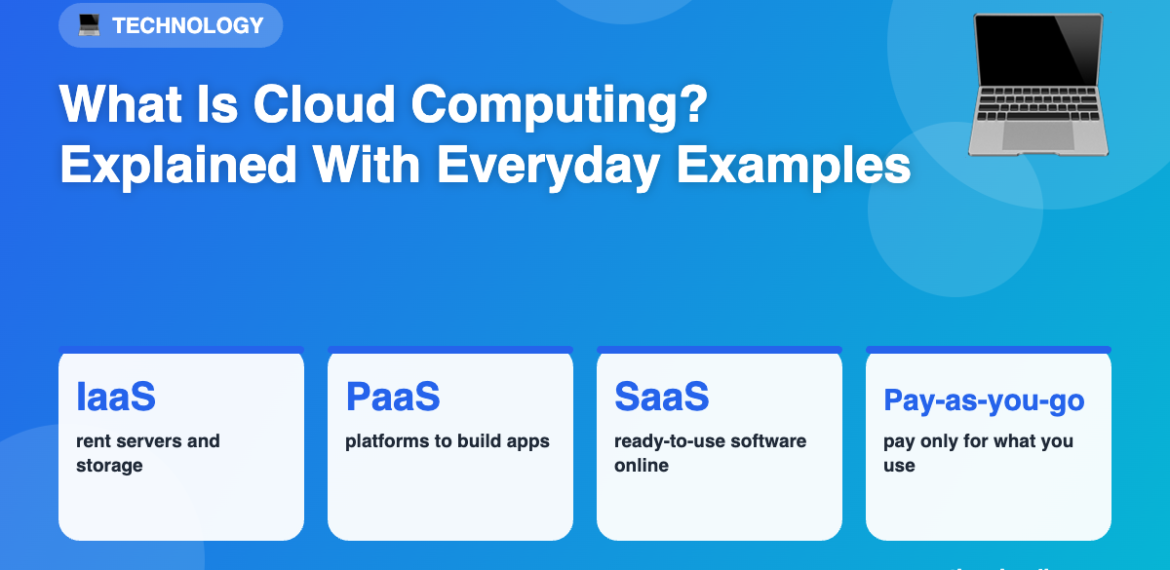
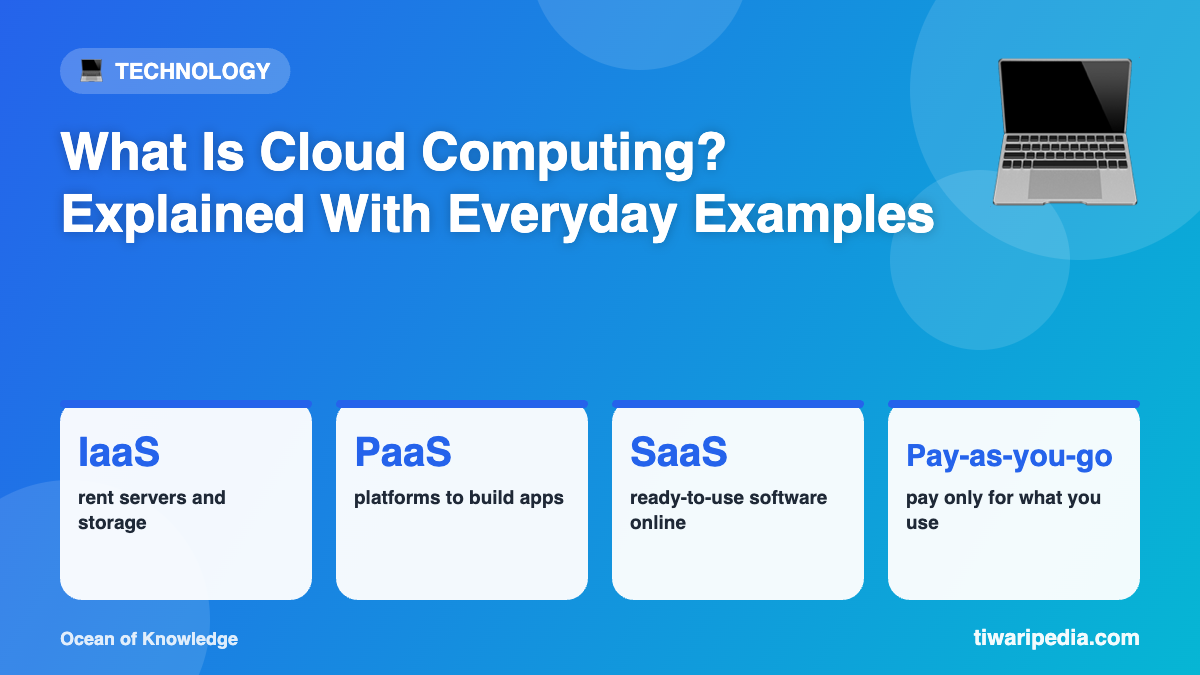
- IaaS (Infrastructure as a Service): rent virtual servers, storage and networks. Companies use it instead of buying their own servers.
- PaaS (Platform as a Service): a ready platform for developers to build and run apps without managing the servers underneath.
- SaaS (Software as a Service): complete software you use in a browser, such as online email, office suites and video-call apps.
Types of cloud
- Public cloud: shared infrastructure run by a provider and used by many customers.
- Private cloud: dedicated to a single organisation.
- Hybrid cloud: a mix of both.
Benefits
- Lower cost: no big upfront hardware spending.
- Scalability: add more capacity in minutes during busy periods.
- Access anywhere: work from any device with internet.
- Backup and recovery: data is stored safely in multiple locations.
Things to watch
- You need a reliable internet connection.
- Security depends on strong passwords and good settings.
- Costs can grow if usage is not monitored.




