

Vaccines are one of the greatest achievements of medicine. They have eliminated smallpox, nearly wiped out polio, and save millions of lives every year. But how do they actually work?
Your immune system has a memory
When a germ such as a virus or bacterium enters the body, the immune system fights back. White blood cells produce antibodies, proteins that recognise and attack that specific germ. After the infection, some cells called memory cells remember the germ, so if it returns the body can respond much faster.
Vaccines create memory safely
A vaccine shows the immune system a harmless version or piece of a germ. The body learns to recognise it and builds memory cells, without you having to suffer the actual disease. If you are later exposed to the real germ, your body is ready.
Main types of vaccines
- Inactivated: contain germs that have been killed.
- Live attenuated: contain weakened germs, such as the measles vaccine.
- Subunit or protein: contain only a piece of the germ.
- mRNA: give cells instructions to make a harmless germ protein, which trains the immune system.
- Toxoid: target the toxin a germ produces, as in the tetanus vaccine.
Why are some vaccines given more than once?
Booster doses remind the immune system, so protection stays strong over time.
What is herd immunity?
When most people in a community are vaccinated, a disease has trouble spreading. This protects people who cannot be vaccinated, such as newborn babies or people with weak immune systems.
A short history
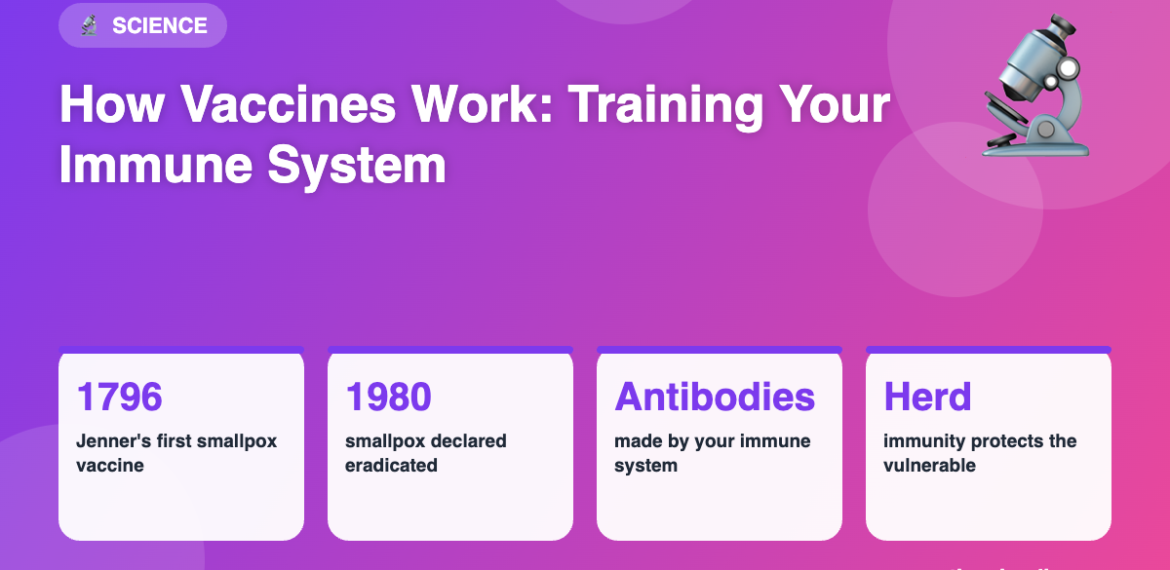
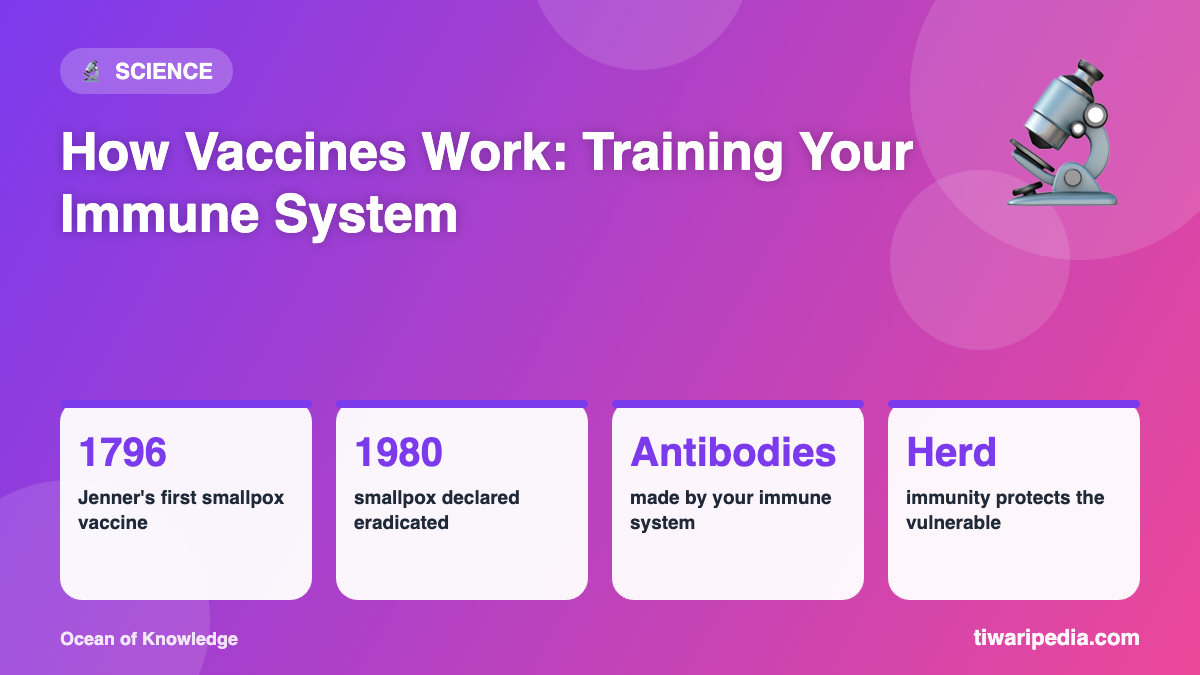
In 1796, Edward Jenner used material from cowpox to protect people against smallpox. That is where the word “vaccine” comes from (vacca is Latin for cow). Global vaccination later led to smallpox being declared eradicated in 1980. India’s Pulse Polio campaign helped the country be certified polio-free in 2014.
This article is for general knowledge. For vaccination schedules and medical advice, consult a qualified doctor.




